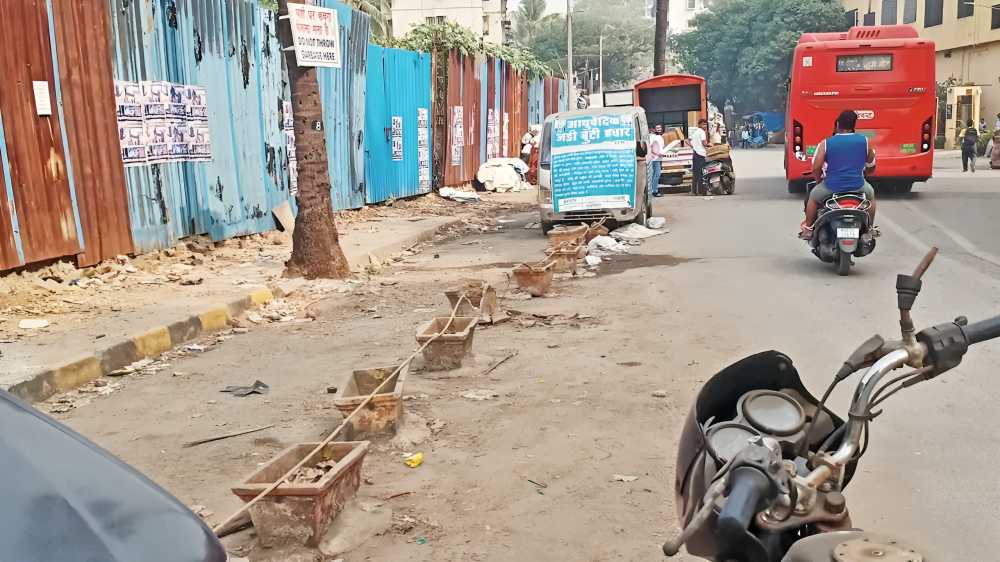

A recent Supreme Court ruling recognising safe, clearly marked footpaths as a fundamental right has renewed attention on pedestrian safety, accessibility and urban planning. However, whether the decision will translate into meaningful improvements on Mumbai’s streets remains to be seen.
For many residents, walking through the city involves navigating broken pavements, open manholes, roadside stalls, construction debris and the threat of falling material. These everyday obstacles make even short journeys difficult, particularly for senior citizens and people with disabilities.
The judgment has been welcomed as an important step towards making urban spaces more inclusive. Yet, its significance will ultimately depend on how effectively civic authorities enforce pedestrian protections.
The Brihanmumbai Municipal Corporation (BMC) has already initiated a citywide ‘pedestrian first’ campaign aimed at removing obstructions from footpaths. Its first phase reportedly targets encroachments along 320 kilometres of pavements, covering garbage, debris, construction materials, parked vehicles, other physical barriers and uneven surfaces.
The scale of the challenge remains considerable. Mumbai has approximately 2,000 kilometres of roads, but only 22% are considered pedestrian-friendly. Since walking accounts for more than half of journeys within the city, improving footpaths could make a substantial difference to everyday mobility.
However, clearing a pavement once is not enough. Encroachments can return quickly unless authorities establish regular inspections, enforce penalties and maintain the cleared spaces. Hill Road in Bandra, where hawker encroachments have remained a recurring concern, illustrates the difficulty of sustaining such efforts.
Courts have also repeatedly raised concerns about banners and hoardings obstructing footpaths and distracting motorists. Despite directions for strict enforcement and penalties, these structures continue to appear on public roads, particularly during festivals.
The latest ruling therefore presents an opportunity for Mumbai to move beyond temporary clearance drives towards lasting pedestrian-friendly infrastructure. Consistent monitoring, accessible pavement design and accountability from civic agencies will be essential.
For residents, the real measure of progress will be whether they can walk safely, comfortably and without having to navigate obstacles on their daily journeys.
Source: Mid-day