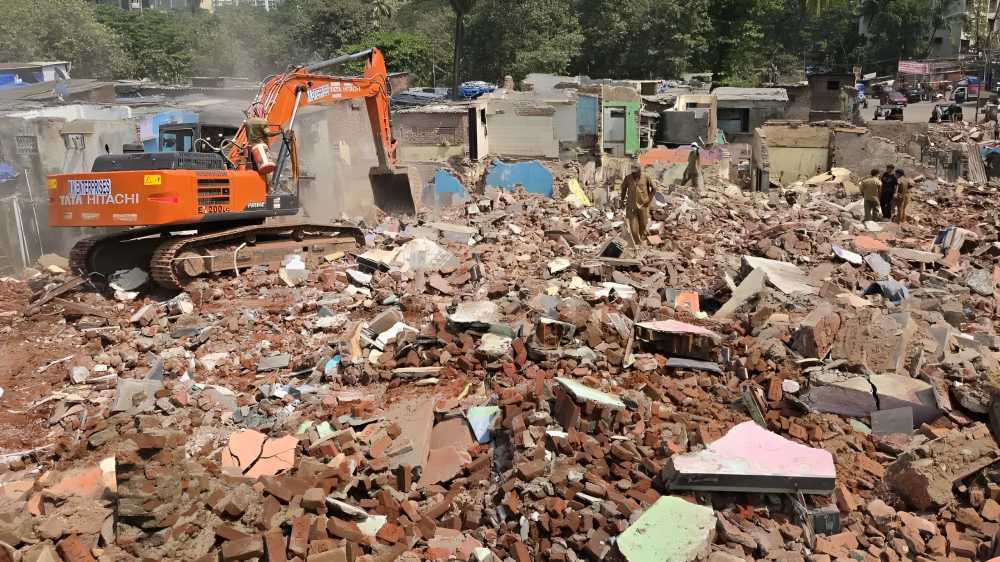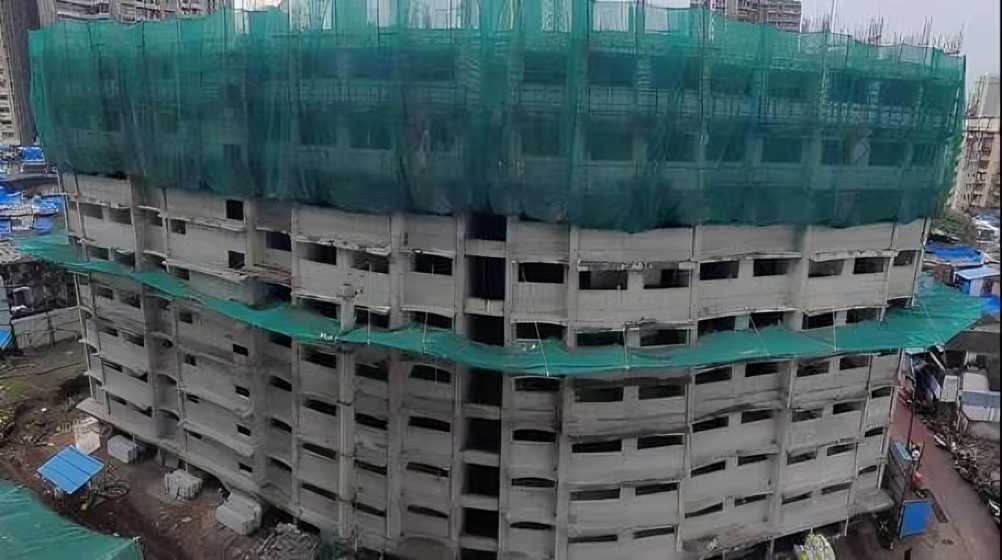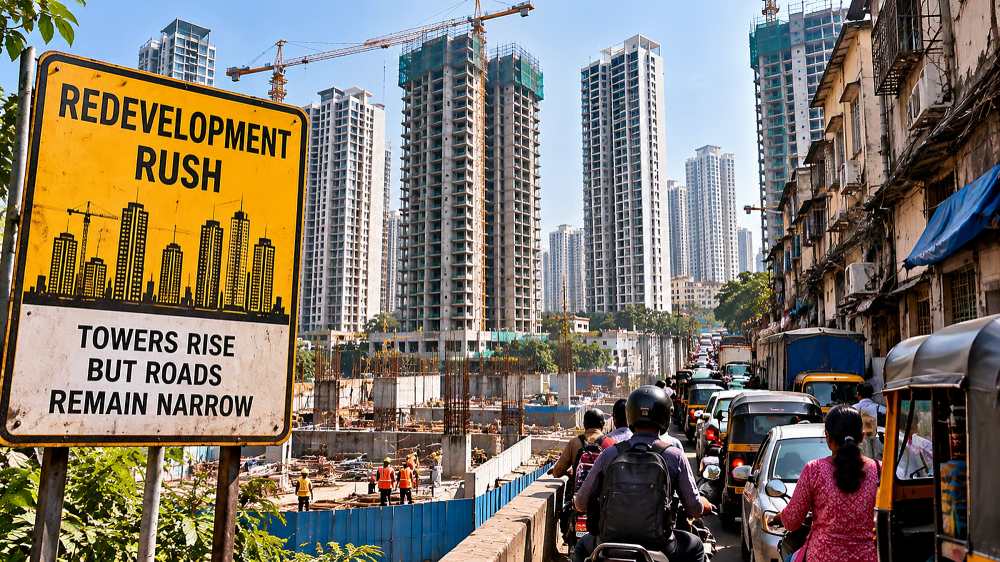

Mumbai and its metropolitan region are facing mounting environmental and infrastructure pressures as high-rise redevelopment, relaxed Floor Space Index (FSI) norms and expanding urban centres accelerate construction, experts have warned.
At a seminar titled “Towering Crisis: The City We Are Rebuilding”, held at the Mumbai Press Club on Thursday, environmentalists and urban planning specialists called for a reassessment of the city’s development approach. Organised by the NatConnect Foundation and moderated by its founder, B N Kumar, the discussion highlighted concerns over congestion, water security and shrinking open spaces.
Redevelopment Outpaces Infrastructure
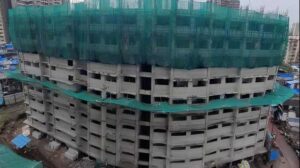
Veteran journalist and Nivara Hakk founding member Gurbir Singh said the redevelopment boom was increasing building heights without corresponding improvements in roads and essential services.
“We are exhausted with land. The redevelopment spree has become a sort of drug. While land is not available, the housing complexes are becoming taller while grappling with roads of the same width as earlier and compounding water crisis,” he said, pointing to the consequences of decades of unplanned growth.
Debi Goenka, Executive Trustee of Conservation Action Trust, questioned whether current construction practices adequately considered environmental limits.
“What we are seeing is not development but ‘devilopment’. A handful of builders and politicians are getting benefited out of it. The base FSI has been increased from 1 to 4. There is something called the carrying capacity. The development that Mumbai is witnessing is not scientific,” he said.
Expansion Risks Repeating Urban Challenges
Stalin D, founder of environmental organisation Vanashakti, warned that new urban centres could encounter the same problems they were intended to solve.
“Expanding urban centres are reproducing the same congestion they were meant to address. Navi Mumbai, originally developed to decongest Mumbai, has itself become congested,” he said. “The proposed Third Mumbai around the Navi Mumbai International Airport in Raigad district, followed by plans for a Fourth Mumbai in Palghar, risk extending the cycle of urban sprawl.”
Planning Coordination and Water Security
Prerna Yadav of the Urban Design Research Institute highlighted gaps in coordination among civic agencies and stakeholders, despite existing frameworks such as the Development Plan, Development Control and Promotion Regulations, and Comprehensive Accessibility Plan.
Mission Green Mumbai founder Subhajit Mukherjee stressed the importance of preparing for unpredictable rainfall and expanding wastewater reuse.
“The next 24 months are going to be tough.”
The experts urged authorities to balance redevelopment and urban expansion with infrastructure capacity, environmental protection and long-term water security.
Source: The Free Press Journal