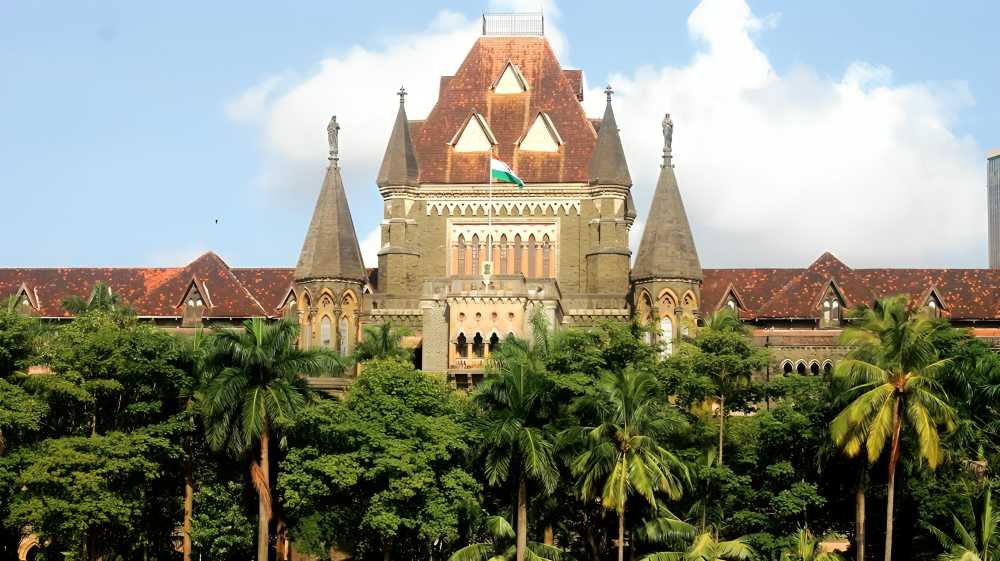

The Bombay High Court has ruled that developers undertaking redevelopment of properties containing both cessed and non-cessed buildings cannot be denied incentive Floor Space Index (FSI) for eligible non-cessed structures merely because the project includes both categories. The court clarified that the benefit is available under the Development Control and Promotion Regulations (DCPR), 2034, provided the land occupied by non-cessed structures accounts for less than 45% of the total plot area.
A division bench of Justices Suman Shyam and Gautam Ankhad overturned decisions by the Maharashtra government and the Brihanmumbai Municipal Corporation (BMC) that had rejected a developer’s claim for incentive FSI for a property at R.K. Wadi on V.P. Road in Girgaon.
The ruling followed a petition filed by Earth Graphics, a partnership firm, and its partner Bhupesh Jain. The property measures 2,882.32 square metres and comprises three plots containing both cessed and non-cessed structures. The non-cessed portion occupies just 15.91% of the overall land area. All the buildings were constructed before 1940 and accommodate 115 residential and 46 commercial occupants.
In October 2021, the Mumbai Building Repairs and Reconstruction Board had confirmed the property’s eligibility for incentive FSI, noting that the non-cessed land component was within the prescribed 45% threshold. However, the BMC did not approve the proposal.
The state government subsequently issued a clarification in August 2026 stating that incentive FSI could not be extended to non-cessed buildings when they formed part of a redevelopment project involving cessed structures. Relying on this interpretation, the civic body rejected the developer’s application.
Court Rejects Government’s Interpretation
Disagreeing with the authorities, the High Court observed that Regulation 33(7)(19) of DCPR 2034 specifically extends redevelopment provisions to eligible non-cessed structures, including rehabilitation benefits for their occupants.
The bench pointed out that allowing rehabilitation benefits to non-cessed occupants while denying developers the corresponding incentive FSI would be illogical. It also held that authorities cannot impose restrictions that are not supported by the regulation itself.
The court further criticised the state government’s clarification for lacking adequate reasoning and the BMC for relying on it without independently examining the developer’s application.
Accordingly, the bench quashed both decisions and directed the authorities to reconsider the redevelopment proposal and grant applicable FSI and incentive FSI, subject to compliance with other prescribed conditions.
Source: The Free Press Journal