December 20, 2025: The Brihanmumbai Municipal Corporation (BMC) has floated two separate tenders amounting to Rs 1.29 billion for improvement works on Mumbai’s Western Express Highway (WEH) and Eastern Express Highway (EEH). The projects will use a specialised road treatment method known as microsurfacing to restore worn stretches of the city’s key arterial corridors.
According to civic officials, the works will cover a total stretch of 15.4 km across the two highways, with the cost per kilometre estimated at around Rs 84.1 million. The decision follows directions issued last month by Mumbai North MP Piyush Goyal, who had called for accelerated road surfacing works across the city.
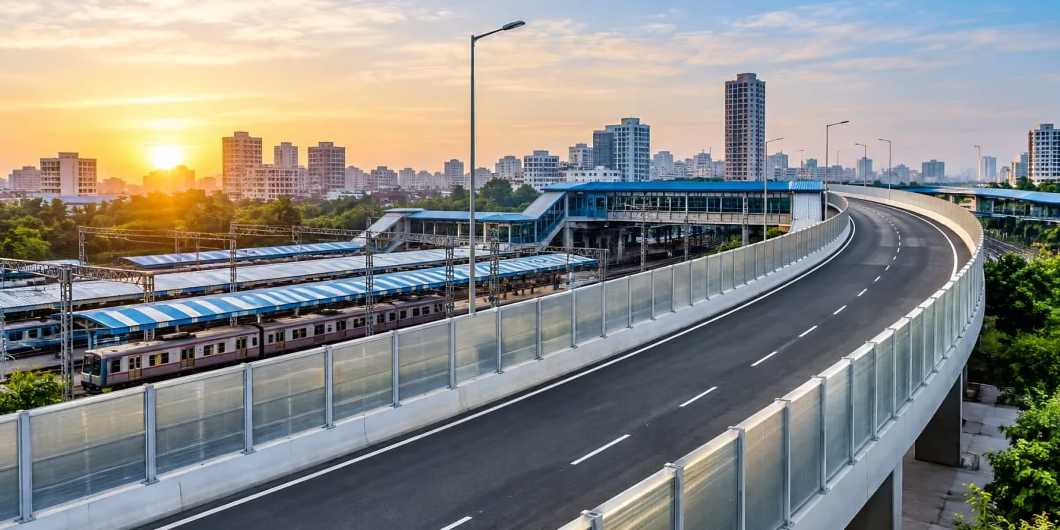
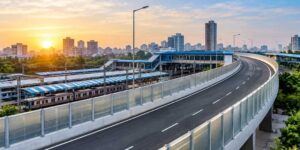
The WEH and EEH serve as crucial north–south links connecting Mumbai’s western and eastern suburbs. As per the tender documents, the BMC will spend approximately Rs 0.69 billion on the WEH and about Rs 0.60 billion on the EEH. While the WEH has a total length of 25.33 km, the EEH extends over 23.5 km.
A senior civic official said the resurfacing on the EEH will be carried out along a 7.9 km stretch from Kamraj Nagar in Ghatkopar to Amar Mahal in Chembur. On the WEH, the microsurfacing works will span 7.5 km between Oberoi Mall Junction in Goregaon and Magathane in Borivali.
The official pointed out that both highways were earlier under the Mumbai Metropolitan Region Development Authority and were transferred to the BMC in 2023. So far, only about 30% of their combined length has been resurfaced, leaving nearly 70% still in need of attention. The current programme aims to address around 7.5 km on each highway, with completion expected within a year.
Microsurfacing involves applying a thin layer of polymer-modified asphalt emulsion mixed with water and additives over existing road surfaces. The technique helps seal cracks, improve skid resistance and extend the life of roads. Civic officials said the method is cost-effective, with an average thickness of about 8 mm, compared to conventional asphalt layers of 25–40 mm, and allows repairs to be carried out in phases to reduce traffic disruption on two of Mumbai’s busiest roads.
Source: Construction World