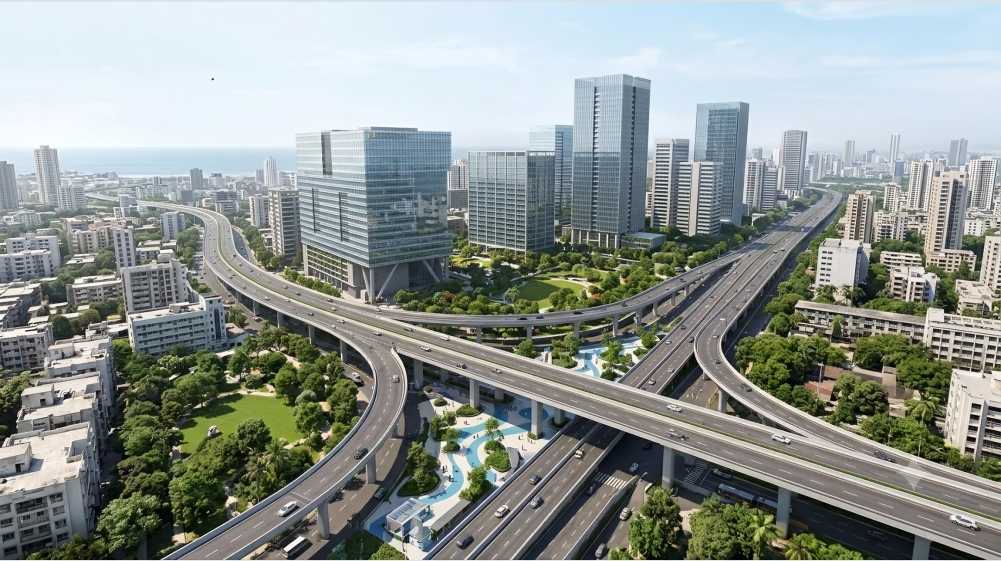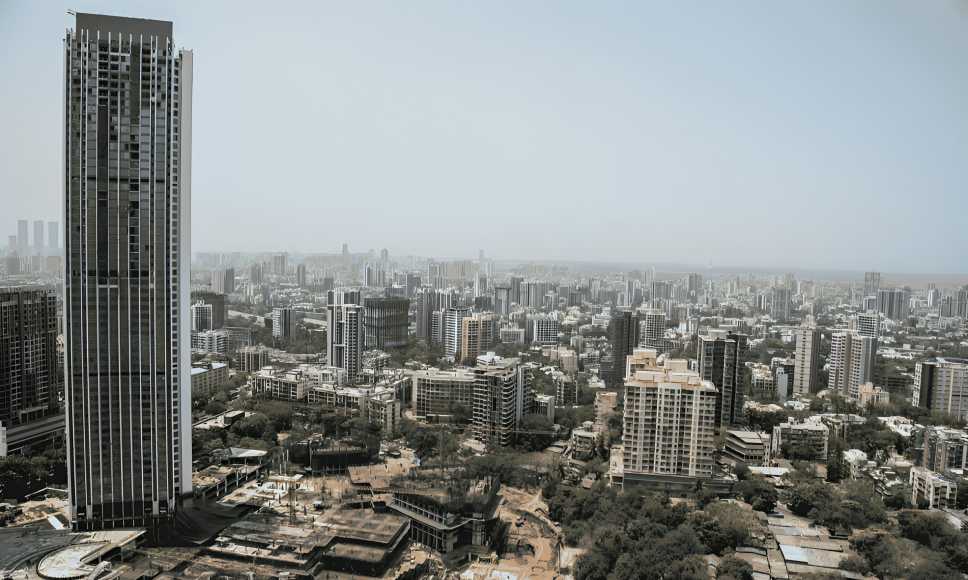

Mumbai’s real estate sector is entering a new phase of vertical expansion after authorities approved the construction of taller buildings on plots accessed by 9-metre-wide roads. The policy change is expected to unlock several stalled redevelopment projects and significantly expand housing supply across the city.
Until now, road width has been a key constraint in determining building height, with narrower roads limiting vertical growth due to concerns around fire safety, traffic movement, and infrastructure capacity. With the revised approval, many ageing housing societies and redevelopment schemes that were previously stuck due to access limitations may now move ahead.
In a land-scarce city like Mumbai, where population density exceeds 20,600 people per sq km, the shift is being seen as a critical step toward optimising space usage. With horizontal expansion largely exhausted, vertical development remains the only viable growth path.
Greater construction flexibility and higher FSI gains
The key impact of the change lies in improved construction potential through enhanced Floor Space Index (FSI) utilisation. FSI determines how much built-up area can be constructed on a given plot.
For instance, if a 1,000 sq metre plot has an FSI of 3, developers can build 3,000 sq metre of space. If FSI increases to 5, construction potential rises to 5,000 sq metre. In cluster redevelopment projects, FSI can go as high as 10, making redevelopment financially more viable as developers must accommodate existing residents while generating additional saleable area.
Mumbai’s rising high-rise landscape
Mumbai’s vertical growth has already been underway for years. Since 2008, over 800 high-rise projects have been cleared by the city’s High-Rise Committee. Industry data also shows that the Mumbai Metropolitan Region has delivered around 154 towers above 40 floors, with another 207 expected by 2030. Currently, the city already hosts 61 towers above 60 floors, the highest in India.
Boost for ageing housing stock
The policy is expected to accelerate redevelopment across key neighbourhoods such as Dadar, Ghatkopar, Borivali, Kandivali, Mulund, Andheri, and parts of South Mumbai, where thousands of old buildings require reconstruction.
Residents typically gain larger homes, improved amenities, parking, and upgraded safety systems, while developers benefit from improved project viability due to higher saleable space.
Infrastructure pressure remains a concern
However, experts caution that higher density will place additional pressure on roads, water supply, sewage systems, parking, and public transport. Fire safety norms, especially for buildings exceeding 120 metres, will continue to require strict approvals.
Impact on buyers and investors
For homebuyers, redevelopment could unlock modern housing in established locations instead of pushing demand to distant suburbs. For investors, upgraded neighbourhoods may offer long-term value as infrastructure improves alongside redevelopment.
The larger shift
Mumbai’s growth trajectory is increasingly vertical. With limited land available, the city’s future depends on smarter land use. While the 9-metre road rule change may accelerate redevelopment, experts emphasise that sustainable growth will depend on matching infrastructure upgrades—not just taller buildings.
Source: The Realty Today