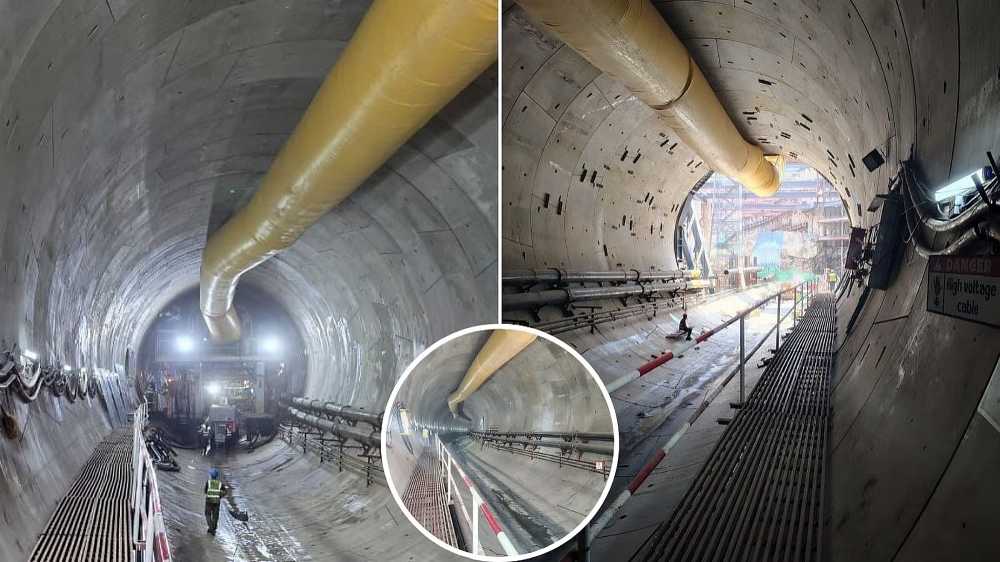

The Mumbai Metropolitan Region Development Authority (MMRDA) has achieved a key construction milestone in the Orange Gate underground tunnel project, completing nearly 250 metres of tunnelling using advanced Slurry Shield Tunnel Boring Machine (TBM) technology. The development marks steady progress in one of Mumbai’s most ambitious infrastructure initiatives aimed at strengthening east–west connectivity across the city.
The project, which involves the creation of a 4.8-km twin underground tunnel corridor, is designed to significantly ease traffic congestion and reduce travel time during peak hours from around 40 minutes to just about 5 minutes. Once completed, it is expected to become a crucial high-capacity mobility route beneath Mumbai’s densely populated urban landscape.
According to MMRDA, the latest progress also includes the installation of permanent segmental tunnel lining rings, an essential step that converts excavation work into a durable structural framework capable of supporting long-term operations. Officials noted that this phase indicates a shift from preparatory groundwork to continuous full-scale tunnelling activity.
Dr. Sanjay Mukherjee, IAS, Commissioner, MMRDA, said, “Executing deep urban tunnelling beneath one of the most densely populated city environments in the country requires exceptional engineering precision, planning, and safety management. This milestone reflects the steady and disciplined progress being achieved on this transformative infrastructure project.”
With Mumbai facing severe limitations on surface-level road expansion, underground transport solutions are increasingly being adopted to enhance mobility without disturbing existing urban structures. The Orange Gate tunnel forms a key part of this broader strategy to build a multi-layered transport system combining metros, elevated roads, coastal routes, and underground corridors.
The tunnel alignment passes through highly sensitive and densely developed urban zones, requiring precise engineering to navigate existing utilities and infrastructure while ensuring minimal disruption to surface-level city activities.
Once operational, the corridor is expected to provide seamless east–west connectivity, improve traffic flow efficiency, and reduce pressure on major arterial roads across Mumbai.
The Orange Gate project is being positioned as a critical step in transforming Mumbai’s transport ecosystem into an integrated, high-capacity network designed to support the needs of a rapidly growing metropolitan region.
Source: The Free Press Journal