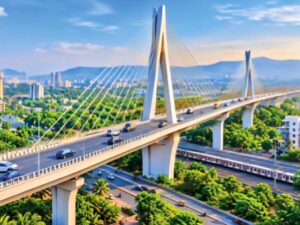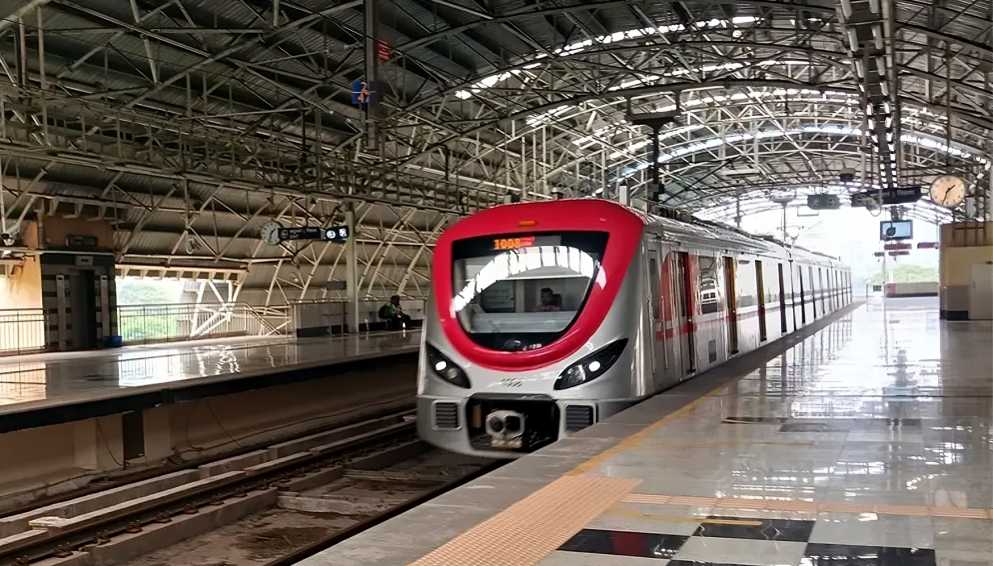

Mumbai’s metro expansion push has entered a significant new phase, with planning authorities advancing two major corridors aimed at strengthening connectivity across the rapidly growing outer Mumbai Metropolitan Region (MMR). The proposed routes—Mira-Bhayandar to Virar and Kanjurmarg to Badlapur—are expected to reshape commuter movement, encourage decentralised development, and reduce pressure on the overburdened suburban rail network.
The Mumbai Metropolitan Region Development Authority (MMRDA) has submitted the detailed project plan for Metro Line 13 to the Maharashtra government for approval. At the same time, preparatory work for Metro Line 14 is progressing through a fresh round of technical consultancy evaluations.
Metro Line 13 is envisioned as a nearly 25-kilometre corridor connecting Mira-Bhayandar with Virar, one of the fastest-developing residential belts in the region. The proposed alignment will include a mix of elevated and underground sections, with multiple stations integrated into the wider metro network.
Transport planners believe the corridor could significantly ease congestion on the western suburban railway system, which continues to handle heavy commuter loads from rapidly expanding housing clusters in the Vasai-Virar region. Over the years, rising property prices in Mumbai have pushed residential growth further into peripheral zones, increasing dependence on long-distance daily travel.
Urban economists note that large-scale transit infrastructure is becoming essential to balance regional development. Without improved inter-suburban connectivity, outer regions risk becoming dormitory suburbs marked by long commutes, traffic congestion, and environmental stress.
Meanwhile, Metro Line 14, planned between Kanjurmarg and Badlapur, is being positioned as a key intervention to connect eastern suburbs with emerging growth centres in the extended Thane region. Authorities have begun a new technical and financial review process after receiving bids from multiple consultancy firms.
The proposed 38-kilometre corridor is expected to significantly cut travel time across eastern MMR routes that currently rely heavily on congested rail and road networks. Experts suggest it could reshape development patterns in Badlapur, Ambernath, and surrounding areas by improving access to Mumbai and Thane job hubs.
The twin metro projects reflect a broader shift towards regional-scale transport planning rather than isolated city-centric development. As Mumbai expands outward, planners are focusing on multimodal integration, transit-oriented growth, and low-carbon mobility systems.
However, experts caution that metro expansion must be supported by affordable housing, ecological safeguards, and last-mile connectivity planning to avoid unchecked urban sprawl. Financing, land acquisition, and environmental approvals remain key factors that could influence project timelines.
Even so, the continued metro expansion underscores a strong push to redefine mobility across the MMR with an emphasis on efficiency, sustainability, and equitable urban access.
Source: Urban Acres