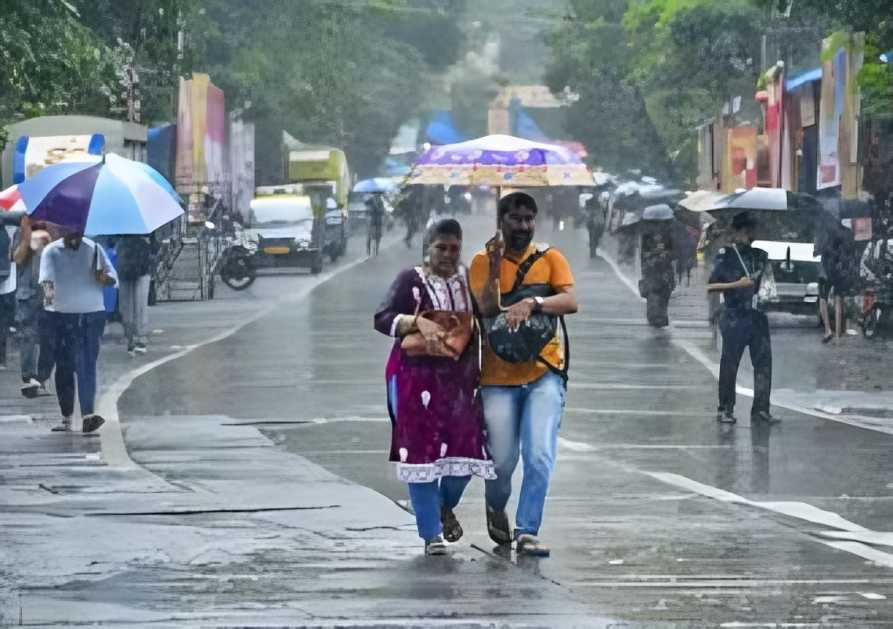

Mumbai’s monsoon rainfall is set to become a tradable financial instrument with the National Commodity and Derivatives Exchange (NCDEX) announcing the launch of India’s first exchange-traded weather derivatives contract from June 1. The initiative is aimed at helping businesses manage financial risks linked to fluctuations in rainfall patterns.
The new cash-settled futures contract will be based on rainfall deviation data provided by the India Meteorological Department (IMD). According to NCDEX, the product has been designed to provide companies with a mechanism to hedge against economic losses arising from unpredictable monsoon conditions.
The exchange stated that sectors such as agriculture, logistics, construction, power, and banking could benefit from the contract by managing weather-related disruptions more effectively, beyond relying solely on government relief measures or insurance claims.
Mumbai, India’s financial capital, frequently experiences severe disruption during the monsoon season, which typically lasts from June to September. Heavy rainfall often affects transportation systems, supply chains, construction activity, and urban infrastructure across the city.
The development comes at a time when India recently projected below-average monsoon rainfall for 2026 for the first time in three years, raising concerns about agricultural production and broader economic growth.
In a promotional campaign shared on Instagram, NCDEX described rainfall as a market indicator and introduced the concept under the tagline “TradeRain”. The advertisement contrasted visuals of commuters navigating waterlogged Mumbai streets with a woman monitoring trading charts, highlighting how weather conditions could now carry financial trading opportunities.
“For someone it’s just rainfall, for some it’s an opportunity,” the advertisement said.
The launch marks a new development in India’s commodity and derivatives market, where weather-linked financial instruments are expected to provide businesses with additional tools for risk management amid increasing climate variability and economic exposure to weather events.
Industry observers believe such products could gradually expand into broader climate-risk management mechanisms as businesses increasingly look for financial safeguards against extreme and unpredictable weather patterns.
Source: Business Standard