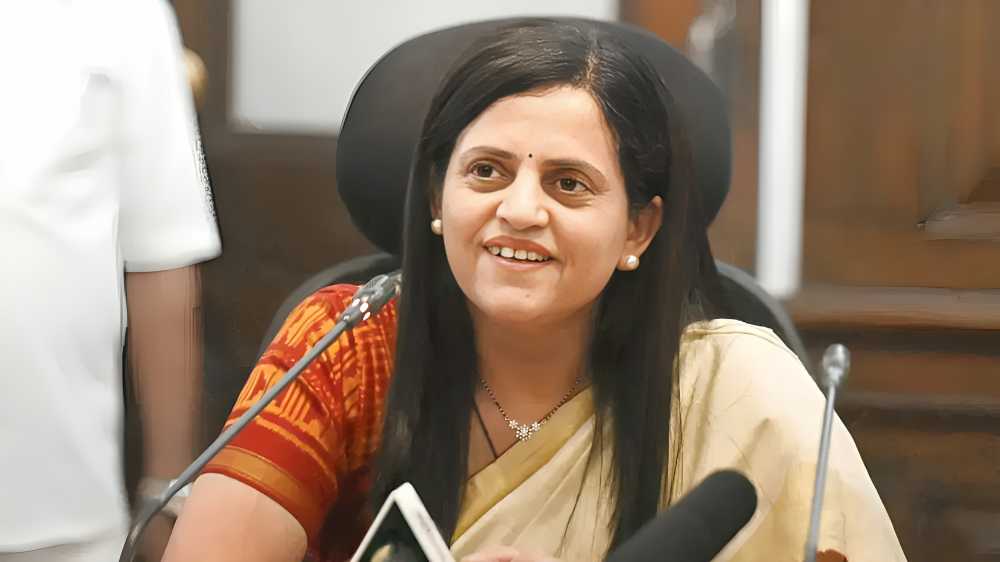

Mumbai’s reputation for coming to a halt during heavy monsoon showers is often overstated, according to BMC Commissioner Ashwini Bhide, who said that images circulated on social media frequently exaggerate the extent of flooding across the city.
Speaking to a Marathi news channel, Bhide said waterlogging is generally confined to a handful of vulnerable low-lying areas and usually subsides within a short period. She argued that repeated circulation of visuals from these locations creates a misleading impression that the entire city is submerged.
“Mumbai appears flooded only to those who wish to see it that way. The ground reality is entirely different,” she said.
Bhide noted that even when intense rainfall coincides with high tide conditions, water accumulation is typically localised and does not remain for long. “Projecting a picture that the entire city is submerged by repeatedly broadcasting a few specific low-lying pockets is incorrect. Mumbai never sinks,” she added.
Highlighting the challenges of managing a densely populated metropolis, Bhide said Mumbai continues to attract thousands of people due to its economic opportunities. However, its geographical position, surrounded by the sea on three sides, makes temporary waterlogging inevitable during extreme weather events.
“When high tide and torrential rainfall occur at the same time, water naturally accumulates in low-lying areas,” she said.
According to Bhide, civic interventions have significantly reduced the number of chronic flooding hotspots across the city. While Mumbai once had more than 200 waterlogging-prone locations, that figure has now come down to around 90 following drainage upgrades and other infrastructure improvements.
She also highlighted several ongoing projects aimed at enhancing the city’s monsoon resilience, including four underground rainwater holding tanks and seven sewage treatment plants under development. In addition, extensive road concretisation works are underway to permanently tackle potholes and improve road conditions.
Bhide said these initiatives are expected to strengthen Mumbai’s drainage network, minimise flooding risks and improve the city’s preparedness for future monsoon seasons.
Source: Mid-day