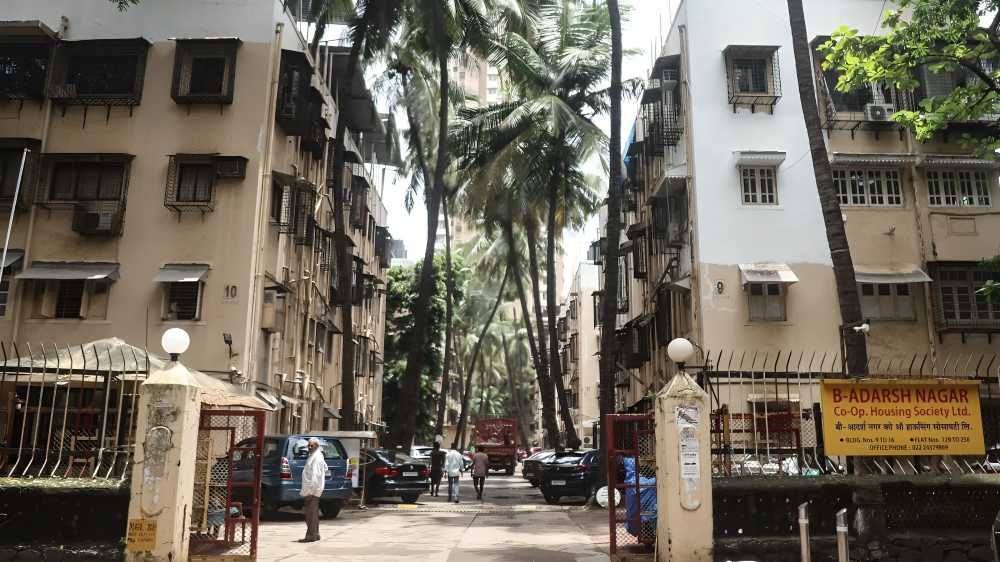

A recent amendment to the Maharashtra Housing and Area Development Authority (MHADA) Act is expected to revive the redevelopment process for nearly 13,000 cessed buildings across Mumbai’s Island City by formally authorising MHADA to declare such structures unsafe.
The Bill, passed by the Maharashtra legislature earlier this month, designates MHADA as the “competent authority” to identify dilapidated cessed buildings, resolving a legal dispute that had effectively stalled the implementation of Section 79A of the MHADA Act since 2025. Once the Governor grants assent and the Supreme Court is informed of the legislative change, MHADA is expected to resume action under the provision.
Section 79A, introduced in 2022, was designed to ensure the timely redevelopment of unsafe cessed buildings. These buildings, constructed before September 1, 1969, in Mumbai’s Island City, pay a repair cess to MHADA.
Under the provision, once a building is classified as C1, indicating that it is beyond repair, the landlord is given nine months to begin redevelopment. If the landlord fails to act, tenants with at least 51% consent are allowed six months to undertake the redevelopment. Should both parties fail to initiate the process within the prescribed timelines, MHADA can intervene and take over the project.
With the legal ambiguity regarding MHADA’s authority now addressed, the agency is expected to conduct fresh structural audits. Buildings identified as C1 will receive notices under the revived Section 79A after the amendment comes into force.
However, the amendment does not automatically guarantee redevelopment. Landlords can still challenge a C1 classification by submitting independent structural audit reports claiming that a building is repairable. In such cases, the Technical Advisory Committee (TAC) will determine which assessment is valid, and its decision may subsequently be challenged before the Bombay High Court.
Despite additional Floor Space Index (FSI) incentives available under Development Control and Promotion Regulations (DCPR) 33(7), redevelopment projects often face delays due to title disputes, litigation, tenant disagreements and financial issues.
The amendment also introduces an alternative mechanism. If tenants do not provide the required 51% consent for redevelopment, landlords will be permitted to reconstruct the building independently while receiving zonal FSI to offset construction costs.
If neither landlords nor tenants initiate redevelopment within the stipulated timelines, MHADA will be empowered to reconstruct or redevelop the property without requiring consent from either party, while preserving the legal rights of both landlords and tenants in the redeveloped project.
Although legal challenges to Section 79A will continue before the Supreme Court and the Bombay High Court, the amendment is expected to remove a major procedural hurdle, allowing redevelopment of Mumbai’s ageing and unsafe cessed buildings to move forward.
Source: The Indian Express