
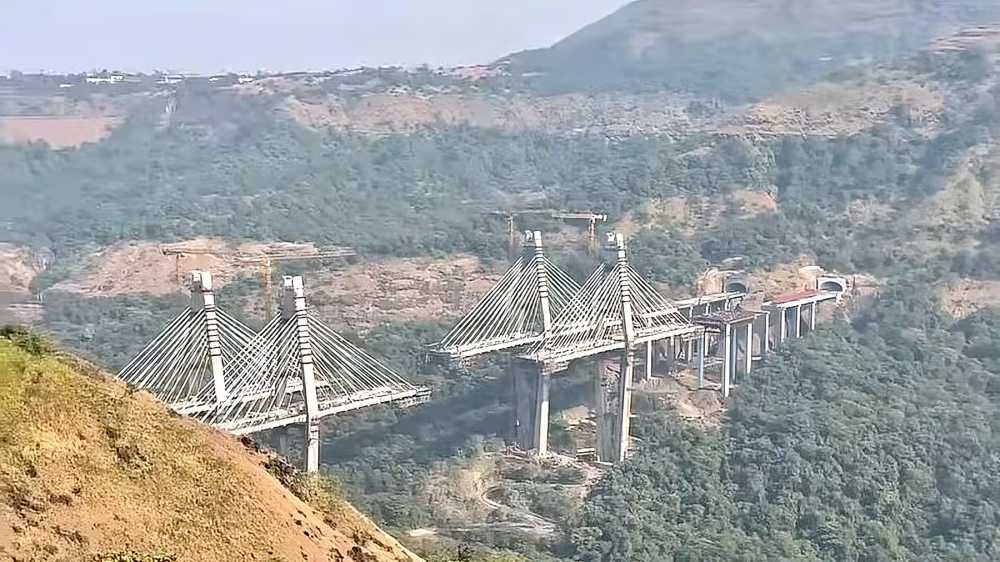
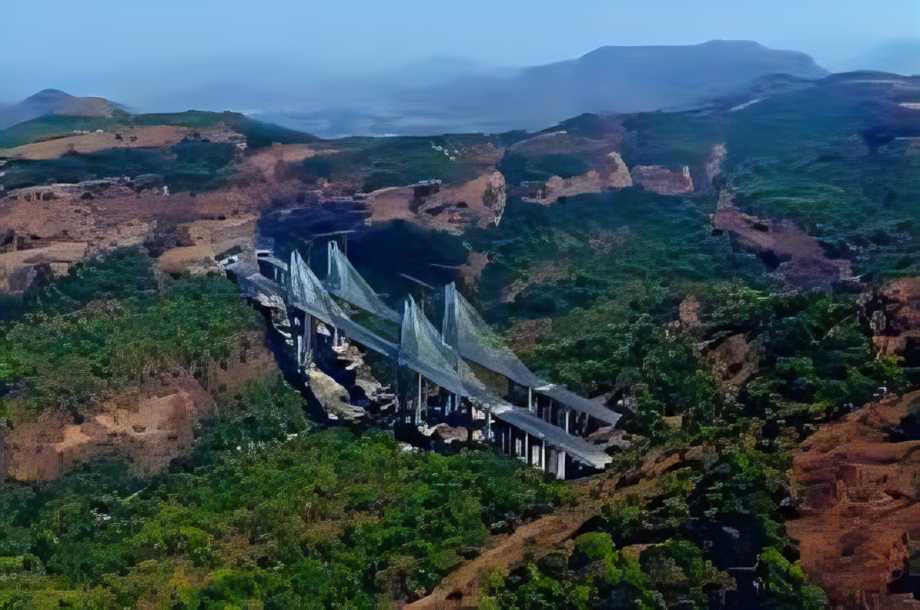
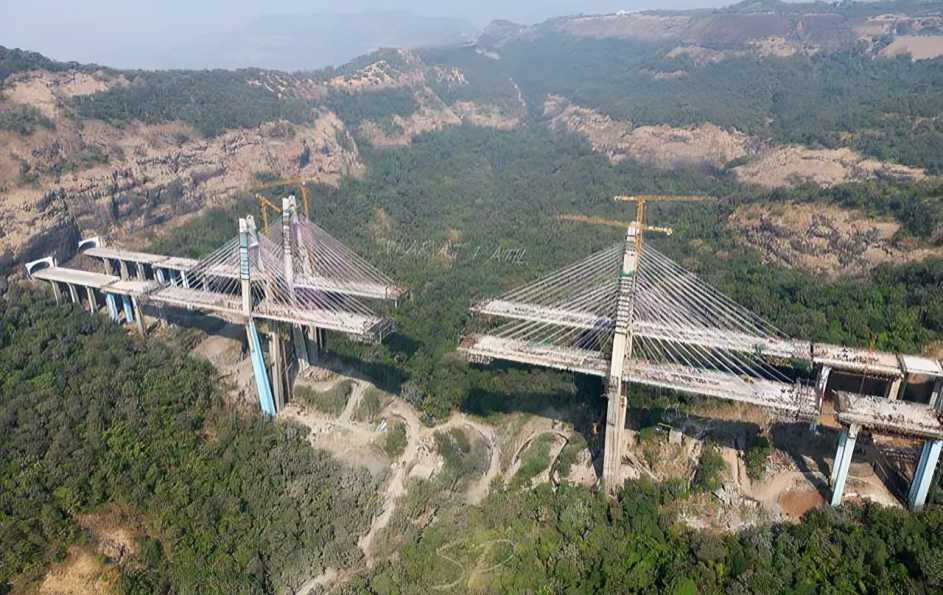
The proposed “Missing Link” between Mumbai and Pune has emerged as one of the most closely watched infrastructure developments in Maharashtra, with expectations extending far beyond reduced travel time. While positioned as a connectivity upgrade, its deeper implications lie in reshaping how distance is perceived, how investment decisions are made, and how real estate corridors evolve even before physical completion.
In this exclusive conversation with ReMumbai, Amit Paranjape, Director of Business Development at Paranjape Schemes Construction Ltd., decodes the psychological and economic impact of the project, its potential to influence Pune’s western growth belt, and the evolving dynamics of the Mumbai–Pune real estate ecosystem.
Q. The Missing Link is being positioned as a travel-time reducer, but do you think its biggest impact will actually be psychological rather than physical? How do infrastructure projects change buyer perception of distance even before they become operational?
A. Absolutely. Travel time reduction is the measurable impact, but the psychological impact is often even larger. Real estate is not driven only by actual distance; it is driven by perceived convenience. Once a major infrastructure project is announced and people start believing that a certain location will become easier to access, the mental map of the city starts changing much before the project is fully operational. For example, if an area earlier felt “too far” or “outside the city”, a strong infrastructure trigger can make buyers start seeing it as “future-connected”. That shift in perception is very important. Buyers, investors, corporates and developers all begin to evaluate the corridor differently. The Missing Link will not just reduce travel time between Mumbai and Pune. It will reduce the psychological distance between the two cities. That could be its biggest long-term impact.
Q. For years, Pune’s growth has largely moved eastward and northward. Could the Missing Link alter this growth pattern and create a new development corridor along the Mumbai-facing western belt?
A. Pune’s growth has historically followed employment and infrastructure. The eastern and north-eastern belts gained because of IT, industrial activity, airport access and improving road networks. The Missing Link could certainly strengthen the Mumbai-facing western belt, especially areas that benefit from improved connectivity towards the expressway and Mumbai corridor. However, I would be cautious about saying that it will completely alter Pune’s growth pattern by itself.
Infrastructure can create the opportunity, but development follows only when employment, social infrastructure, schools, hospitals, retail, and liveability come together. The western belt already has strong natural advantages: proximity to Mumbai, access to the expressway, scenic surroundings, and established residential catchments in places like Baner, Balewadi, Wakad, Hinjawadi, Bavdhan, and beyond. So yes, the Missing Link can accelerate the importance of the western corridor. But for it to become a truly large development corridor, it will need supporting civic infrastructure, employment nodes and planned urbanisation.
Q. Historically, expressways create winners and losers. Which micro-markets in Pune stand to gain the most from the Missing Link, and which areas could potentially lose their relative advantage?
A. The biggest beneficiaries are likely to be micro-markets that sit naturally on the Mumbai-Pune connectivity axis. In Pune, areas such as Hinjawadi, Wakad, Baner, Balewadi, Bavdhan, Kiwale, Ravet, Punawale and parts of the western periphery could gain because they are already connected to the expressway ecosystem and have either residential, commercial or township potential. Hinjawadi is particularly important because it combines employment with residential demand. If Mumbai connectivity improves further, it strengthens the case for senior professionals, entrepreneurs, NRIs and investors who see value in Pune but want better access to Mumbai.
As for areas that may lose relative advantage, I would not say they will decline. Pune is a multi-directional market. But some micro-markets that were earlier preferred mainly because they offered better connectivity may face stronger competition from western locations once the Mumbai-Pune travel perception improves. The winners will be locations that combine connectivity with real liveability. Connectivity alone will not be enough.
Q. Do you believe Pune is gradually transitioning from being Mumbai’s ‘overflow market’ to becoming an independent economic powerhouse? What indicators in the real estate sector support this shift?
A. Pune has already moved beyond being only Mumbai’s overflow market.
The city has its own economic identity now. It has IT, automotive, manufacturing, education, start-ups, services, research, healthcare and a very strong talent base. People are not coming to Pune only because Mumbai is expensive. They are coming because Pune offers employment, lifestyle, education and long-term liveability.
In real estate, this shift is visible in several ways. We are seeing stronger end-user demand, larger homes, township living, premium residential demand, office leasing growth, rental demand from young professionals and increasing interest from institutional capital.
Another important indicator is that buyers are not just looking for affordability anymore. They are looking for quality of life, amenities, community, open spaces and better planning. That is a sign of a maturing market. So yes, Pune is becoming an independent economic powerhouse. Improved Mumbai connectivity will only add to that story; it will not define it alone.
Q. Infrastructure announcements often trigger speculative land buying. How can investors differentiate between genuine long-term opportunities and short-term hype around the Missing Link?
A. Investors should be very careful not to buy only on the basis of a headline. A genuine opportunity will have multiple supporting factors: clear access, realistic development timelines, zoning clarity, employment catchment, social infrastructure, water, roads, approvals and demand visibility. Short-term hype usually comes with vague promises: “this will become the next big thing”, “prices will double”, or “buy now before everyone knows”. That is not investment logic. That is speculation.
A good investor should ask a few simple questions: Is the location actually accessible today? Will end-users want to live there? Is there employment nearby or likely to come? Are schools, hospitals and retail developing? Is the land title and approval status clean? Is the price already factoring in too much future appreciation? Infrastructure is a catalyst. It is not a substitute for fundamentals.
Q. The Missing Link will significantly improve connectivity for logistics and commercial movement. Could we see industrial and warehousing demand influence residential development patterns around Pune in the coming decade?
A. Yes, that is quite possible. In many cities, residential growth follows employment and logistics corridors. If the Missing Link improves commercial movement between Mumbai and Pune, it can strengthen industrial, warehousing and logistics activity along certain connected belts. When industrial and warehousing demand grows, it creates demand for housing at multiple levels: workers, supervisors, managers, entrepreneurs and service providers. Over time, this can create residential clusters, rental housing demand, plotted development, affordable housing and eventually mid-income and premium housing, depending on the employment profile.
However, this needs to be planned properly. Industrial growth and residential growth must be supported by roads, public transport, civic infrastructure and environmental safeguards. Otherwise, we create congestion without quality urban development.
The opportunity is real, but it must be planned and not left entirely to organic sprawl.
Q. Many infrastructure projects reduce travel time, but not all translate into real estate appreciation. What additional ingredients—employment, social infrastructure, policy support—must be present for the Missing Link to create lasting value?
A. Travel time reduction creates interest. Lasting value comes from a complete ecosystem. For real estate appreciation to sustain, you need employment generation, strong access roads, public transport, schools, hospitals, retail, safety, water, drainage, power and clear development policies. The most successful real estate locations are not necessarily the closest ones. They are the most liveable ones.
The Missing Link can create a strong advantage for the western corridor, but the value will be highest in locations where connectivity meets liveability. If an area only becomes faster to reach but does not offer good social infrastructure, the appreciation may be limited or speculative.
For long-term value, infrastructure must be supported by urban planning.
Q. Pune has emerged as one of India’s strongest rental housing markets due to its IT and education sectors. How could improved Mumbai connectivity reshape the city’s rental demand dynamics over the next five years?
A. Improved Mumbai connectivity can strengthen Pune’s rental market in a few ways.
First, it may attract more professionals who work across both cities or have business interests in Mumbai but prefer Pune’s lifestyle and cost structure.
Second, it can increase demand from senior executives, consultants, entrepreneurs and hybrid workers who need access to Mumbai but do not want to live in Mumbai full-time.
Third, areas on the western side of Pune, especially those connected to Hinjawadi, Baner, Balewadi, Wakad, Bavdhan and the expressway corridor, could see stronger rental interest.
Pune’s rental demand is already supported by IT, education and manufacturing. Better Mumbai connectivity can add one more layer: people who want the economic access of Mumbai with the liveability of Pune. That said, rental growth will still depend on job creation, quality of housing, amenities and daily convenience.
Q. If you were advising a first-time homebuyer today, would you recommend buying based on existing infrastructure or future infrastructure such as the Missing Link? How should buyers balance certainty versus potential upside?
A. For a first-time homebuyer, I would always say: buy based on what works for your life today, and treat future infrastructure as upside. Your home is not just an investment. It is where your family will live. So the first questions should be practical: Is your workplace accessible? Are schools, hospitals and daily needs available? Is the developer credible? Is the project approved? Can you afford the payment comfortably?
Future infrastructure can improve appreciation, but it should not be the only reason to buy. Timelines can shift, execution can take time, and markets can move differently from expectations.
So the balance is simple: choose a location that is liveable today and likely to become better tomorrow. That is the safest combination.
Q. Looking ahead to 2035, when people discuss Pune’s transformation, do you think the Missing Link will be remembered as a landmark infrastructure project similar to the Mumbai-Pune Expressway itself, or merely as an efficiency upgrade? Why?
A. The Mumbai-Pune Expressway was transformational because it changed the relationship between two cities. It made Pune and Mumbai feel economically closer and opened up an entirely new way of thinking about regional growth.
The Missing Link may not have the same emotional first-mover impact as the original expressway, but it can still become a very important landmark project if it meaningfully improves speed, safety, reliability and movement between the two cities.
If it only reduces travel time, people may remember it as an efficiency upgrade. But if it changes investment patterns, strengthens the western Pune corridor, improves logistics, supports industrial growth and deepens the Mumbai-Pune economic relationship, then by 2035 it will be remembered as much more than a road project.
My view is that it has the potential to become a landmark connector, but its legacy will depend on what grows around it.
Final remarks
In essence, Amit Paranjape’s insights reinforce that the “Missing Link” is not merely an infrastructure intervention but a catalyst capable of reshaping perception, investment behaviour, and long-term urban development patterns across the Mumbai–Pune corridor. While its immediate impact will be measured in reduced travel time, its enduring significance will depend on how effectively it integrates with employment hubs, social infrastructure, and planned urbanisation in Pune’s western belt.
As the region continues its evolution into a more integrated economic zone, the Missing Link stands out as a potential inflection point, one whose true legacy will be defined not just by connectivity, but by the quality of growth it unlocks.