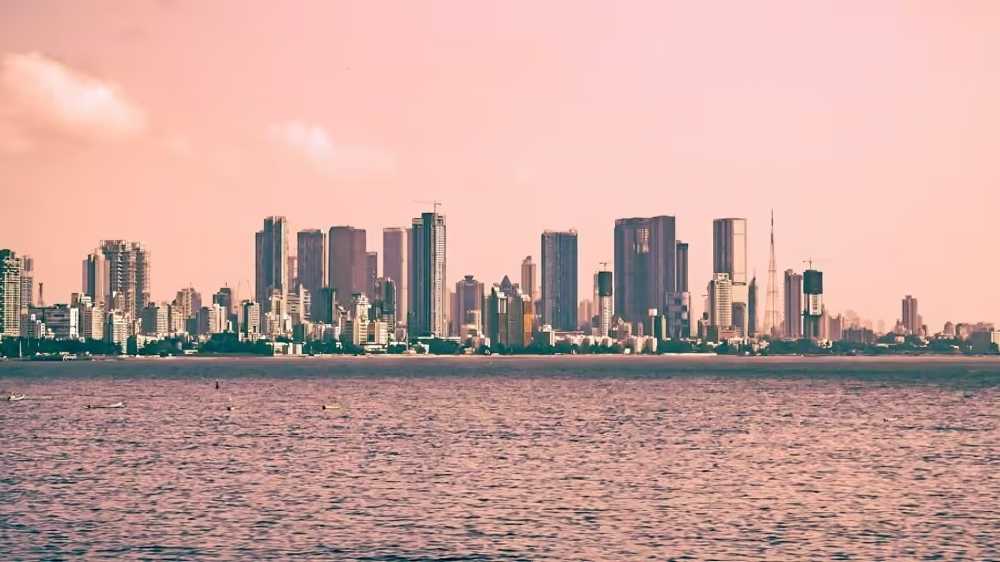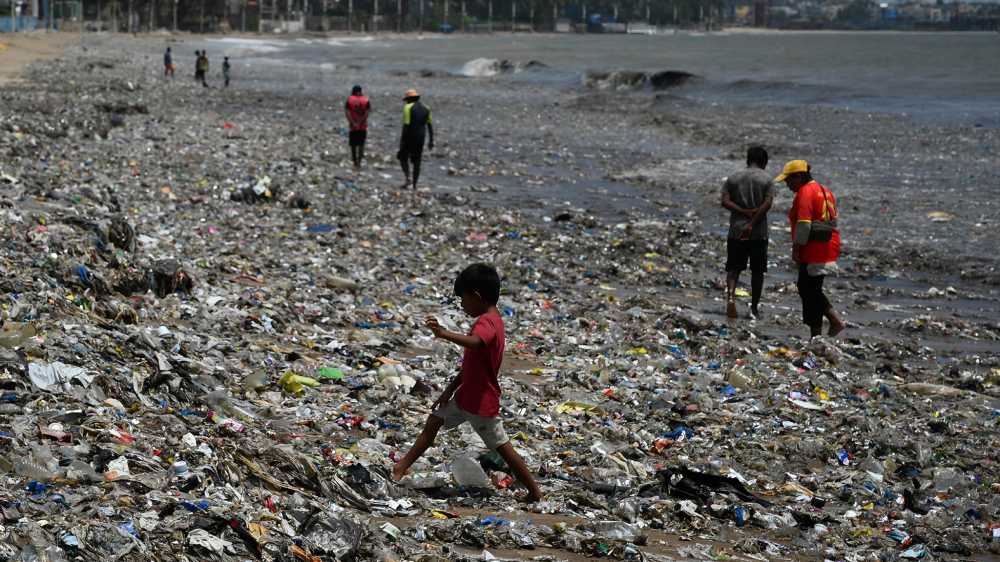

Mumbai’s coastline has once again highlighted the growing challenge of marine pollution, with more than 2,500 metric tonnes (MT) of waste washing ashore after a week of intense monsoon rainfall and high tides. The massive cleanup operation by the Brihanmumbai Municipal Corporation (BMC) has brought attention to the increasing amount of garbage entering the Arabian Sea through the city’s drainage network.
Civic officials said waste such as plastic, thermocol, clothes, wooden pieces and household garbage dumped into open drains and nullahs is carried into the sea through stormwater drain outlets. During periods of high tide, the floating waste is pushed back towards the shoreline, creating large garbage deposits on beaches.
“The waste disposed of in the sea and creeks does not sink and continues to float. During the monsoon, high tidal waves push this floating waste back onto the beaches,” a civic official said.
According to BMC data, Juhu Beach recorded the highest accumulation, with 1,824 MT of waste collected, accounting for nearly 72% of the total garbage removed. It was followed by Versova with 277.6 MT, Dadar Mahim Chowpatty with 152 MT, Chimbai with 127.2 MT, Madh Marve with 44.24 MT, Gorai with 38.82 MT and Girgaon Chowpatty with 33.66 MT.
Officials attributed the heavy accumulation at Juhu to the presence of several stormwater drain outlets that release waste directly into the sea.
“Normally, floating waste drifts away from the mainland. During the monsoon, however, stronger and more frequent high tides prevent it from dispersing and instead push it back onto the shoreline,” another official said.
The western suburbs experience higher waste accumulation due to their dense residential areas, where large quantities of garbage enter drains and canals before reaching coastal waters.
The issue is further highlighted by pollution levels recorded along Mumbai’s coastline. A BMC Sewerage Department study under the Sewage Treatment Plant (STP) project found Biochemical Oxygen Demand (BOD) levels of nearly 100 mg per litre in seawater samples from Bandra and Versova, and around 50 mg per litre at Juhu. These figures are significantly above the Central Pollution Control Board’s (CPCB) recommended limit of 10 mg per litre for coastal waters.
The Ocean Cleanup, a Netherlands-based non-profit organisation, estimates that around 5,000 MT of plastic waste enters the Arabian Sea annually through nearly 50 drains across Mumbai, impacting around 220 km of coastline, 152 sq km of mangroves and 107 protected species.
Marine ecologist Shaunak Modi, Director of the Coastal Conservation Foundation, said the issue becomes more severe during the monsoon.
“Plastic waste on beaches directly affects marine life. Crabs and other organisms burrow beneath the sand, but when beaches are covered with plastic, they are unable to emerge, disrupting the ecosystem,” Modi said.
He added, “Plastic does not decompose. After beach clean ups, much of the waste is transported to landfills near mangroves. During the monsoon, leachate generated from these dumps enters adjoining mangroves and water bodies, causing secondary pollution.”
To control the flow of waste into water bodies, the BMC has installed trash booms — floating barriers equipped with submerged nets — at 21 stormwater drain outlets, including those along the Dahisar, Poisar and Mithi rivers. The civic body plans to extend the system to all 82 stormwater drain outlets over the next five years.
“The expansion will significantly reduce the amount of floating waste entering the sea,” a civic official said.
However, environmental experts stressed that preventing waste generation and improving collection systems remain crucial. “Most floating waste entering water bodies originates in areas where solid waste management remains inadequate. Unless waste collection improves and dumping into drains is prevented, marine litter will continue to accumulate despite these interventions,” said Rahul Ahir, professor of wastewater engineering and former adviser to the Maharashtra government.
Mumbai Marine Pollution Snapshot
- Plastic waste entering Mumbai’s sea annually: Around 5,000 MT
- BOD level recorded at Bandra and Versova: Nearly 100 mg/litre
- BOD level recorded at Juhu: Around 50 mg/litre
- CPCB coastal water limit: 10 mg/litre
BOD (Biochemical Oxygen Demand) indicates the amount of oxygen required by microorganisms to break down organic matter in water. Higher BOD levels indicate greater organic pollution and deteriorating water quality.
Source: The Indian Express