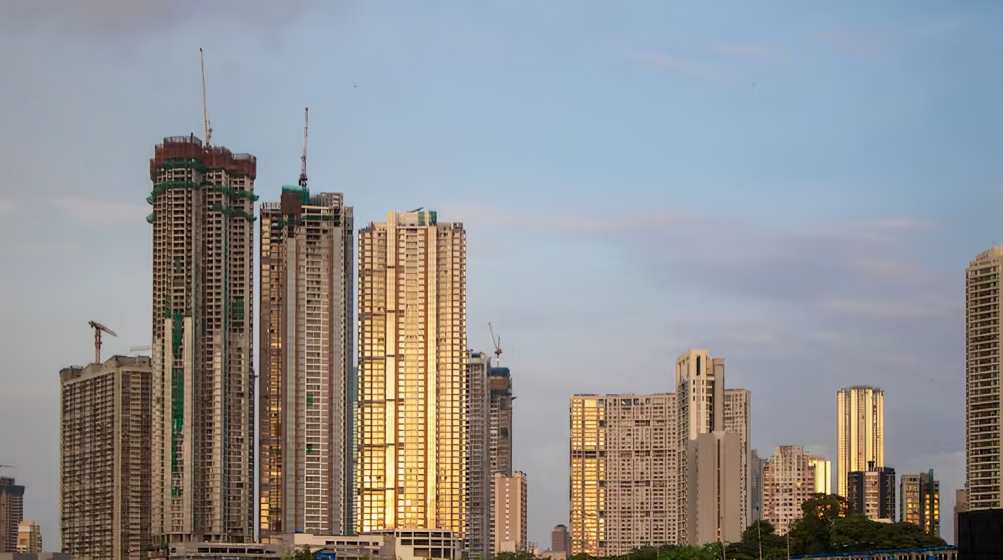

Across Mumbai and the wider metropolitan region, neighbourhood groups are increasingly raising concerns over rapid redevelopment, rising population density and infrastructure that residents say is struggling to keep pace.
The latest protest came from Powai and Chandivali, where around 125 residents gathered on August 2 to oppose several proposed developments. These include a Global Capability Centre, an MMRDA-SRA rehabilitation project linked to Mithi River rehabilitation and the redevelopment of Citipark, along with other projects around Hiranandani Gardens.
Residents have sought greater transparency on Floor Space Index (FSI) and Transferable Development Rights (TDR) approvals, restoration of pavements and access routes, and comprehensive environmental and traffic impact assessments before major projects receive clearance.
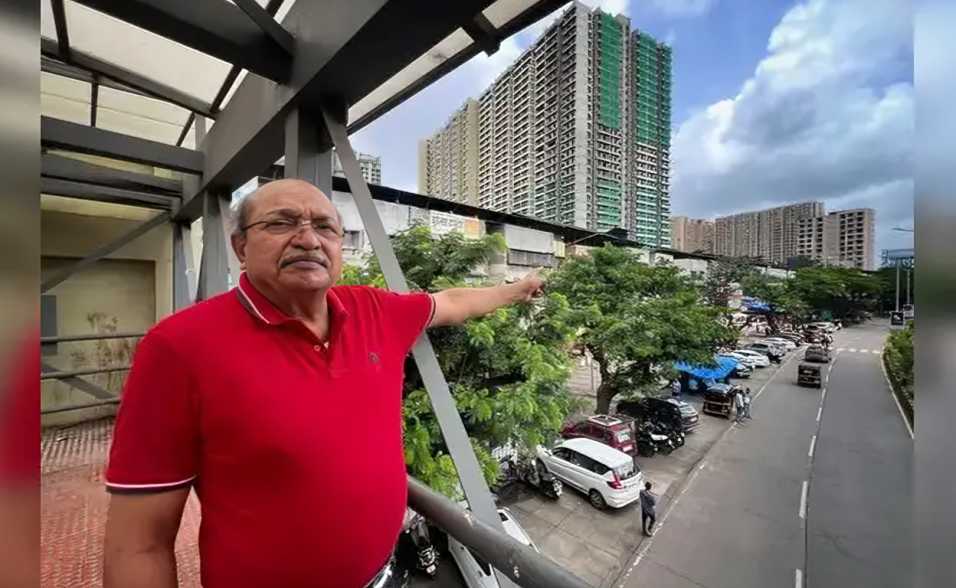
Pamela Cheema, chairperson of the Powai ALM, said residents were particularly worried about the scale of proposed construction and its impact on existing infrastructure.
“We, as the residents of Powai, are very, very concerned about the kind of mega construction that is happening here,” Cheema says. “Honestly, this area of Powai cannot support this kind of development. Even now, as things stand, traffic is already a huge problem in Powai.”
She questioned the location of the proposed GCC, arguing that thousands of employees and service vehicles would add pressure to an already congested residential area.
“Other GCCs that we have seen, for instance on the Western Express Highway, are self-contained,” she says. “There is no disturbance to the surrounding residential areas. But here, this is a dense residential area and, in my opinion, this kind of development should not take place in a dense residential area.”
Cheema said residents were not opposed to development itself but wanted projects to be located where infrastructure could support them.
“The idea of a Global Capability Centre is very good. We are not obstructing any kind of development,” she says. “We are just saying that you have to change the location. Go to an area in the MMR region which is open. There’s a lot of land. You can even go for a bigger GCC centre and employ even more people.”
Similar concerns are emerging in Navi Mumbai, where residents have flagged high-rise redevelopment, traffic congestion, declining green cover and shrinking flood-retention capacity. Environmental campaigners have also raised questions over wetland protection and the pace of regulatory action.
In Charkop, residents and environmental activists have opposed mangrove removal linked to the Versova-Dahisar Coastal Road. In other parts of the city, including Lokhandwala-Oshiwara, Bandra, Malabar Hill and older gaothans, residents have expressed concerns about the impact of redevelopment on roads, drainage, fire safety, open spaces and local character.
Traffic activist Madhu Shankar said, “In many localities, vehicles occupy both sides of the road and even the pavements,” she says. “Residents can neither drive comfortably nor walk safely. Unless redevelopment is matched with transport planning, the situation will only worsen.”
The broader concern is not opposition to Mumbai’s growth, but whether civic infrastructure can expand at the same pace. Residents argue that increased FSI and taller buildings must be accompanied by stronger transport networks, drainage systems, water supply, emergency services, open spaces and environmental safeguards.
As Mumbai continues to pursue ambitious economic and infrastructure targets, the growing neighbourhood movements are pushing planners to consider not just how much the city can build, but how much development its existing systems can sustainably support.
Source: Mumbai Mirror