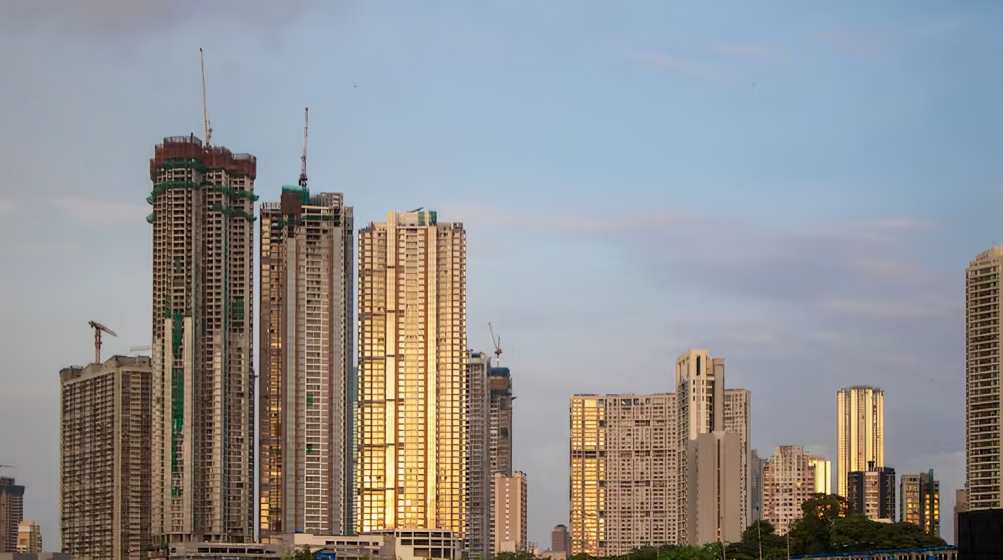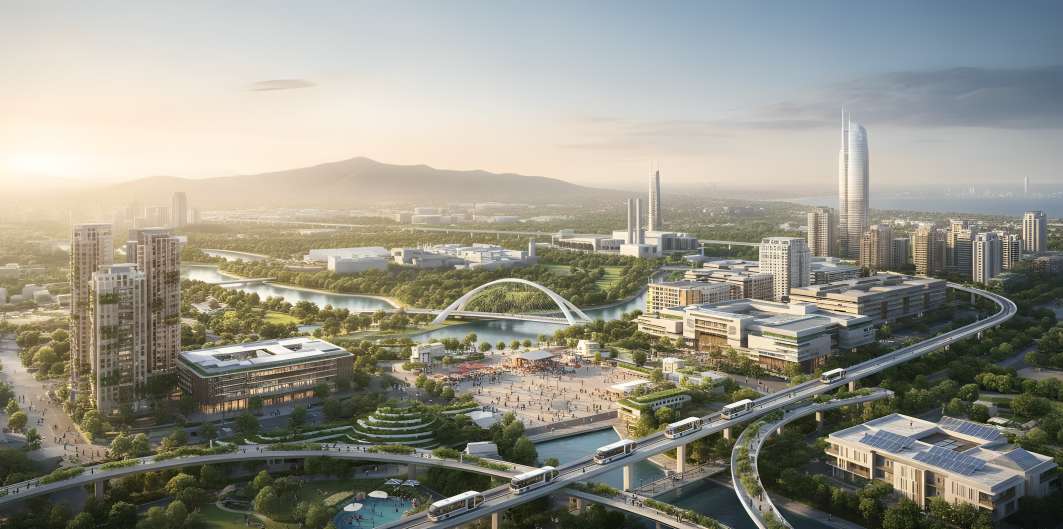

Mumbai’s rapid expansion is facing a major challenge: limited land. With property prices high and pressure mounting on roads and public infrastructure, Maharashtra is now planning a new urban centre beyond Navi Mumbai. The proposed Karnala-Sai-Chirner (KSC) New Town, widely referred to as “Mumbai 3.0”, will span 323.44 sq km and include 124 villages across Uran, Panvel and Pen talukas in Raigad district.
The Mumbai Metropolitan Region Development Authority (MMRDA) has been designated as the project’s New Town Development Authority. Its location near the Atal Bihari Vajpayee Sewri-Nhava Sheva Atal Setu and Navi Mumbai International Airport is expected to strengthen its connectivity and development potential.
The project is envisioned as more than a residential extension. Plans include commercial areas, technology hubs, logistics facilities, data centres, healthcare, education and housing, with the aim of creating employment opportunities closer to residential communities.
Amar Shah, Director and Co-founder of Golden Abodes, said urban expansion around Mumbai typically develops along major economic and transport corridors rather than in isolation. “When people talk about a ‘Third Mumbai’, the conversation usually jumps straight to the greenfield master plan. But if you study how regional urban growth historically unfolds around Mumbai, greenfield boundaries tell only half the story,” he said.
Connectivity is expected to be a key advantage. Besides Atal Setu and the upcoming airport, KSC New Town will benefit from links to the Panvel-Karjat railway corridor, Virar-Alibaug multimodal corridor and Mumbai-Pune Expressway.
Vishal N Ratanghayra, Founder and CEO of Platinum Corp., said, “Mumbai 3.0 has the potential to fundamentally reshape the growth trajectory of the MMR by moving beyond the traditional model of residential expansion and creating a new, integrated economic centre,” he told NDTV.
The MMRDA has also secured a proposed $12 billion investment commitment from Brookfield for real estate, transit-oriented development, logistics parks, data centres and global capability centres.
However, experts say the project’s success will depend on developing housing, jobs, transport, schools, healthcare, green spaces and commercial infrastructure together. If planned effectively, Mumbai 3.0 could emerge as a self-sustaining economic hub rather than simply another commuter suburb.
Source: News18