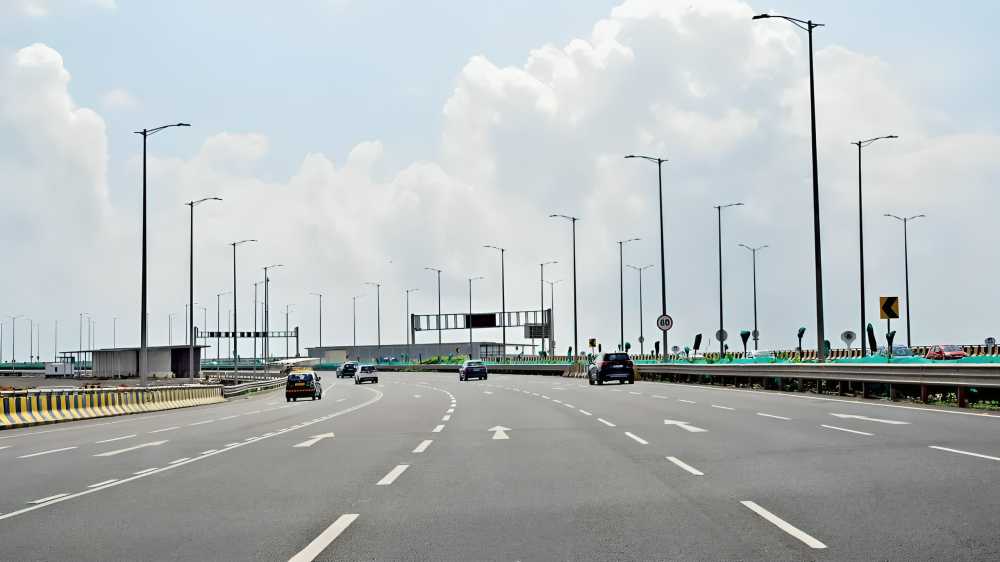

Mumbai’s pothole problem has renewed questions over why some major infrastructure projects, including the Bandra-Worli Sea Link, have managed to maintain their road surfaces while several newly repaired city roads deteriorate after heavy rainfall.
An MSRDC engineer said, “Minor defects, including potholes, are attended to through routine maintenance and patchwork. A complete renewal of the surface is generally carried out at intervals of around 5 years, depending on its condition.”
Why the Sea Link Surface Needs Different Treatment
Resurfacing the 5.6-km Bandra-Worli Sea Link involves additional structural considerations. Simply adding another asphalt layer could increase the bridge’s load and alter the road level. During complete renewal, the existing 25-mm surface layer is removed and replaced with a new layer of similar thickness.
“This process allows us to maintain the original road level and, at the same time, prevents any unnecessary additional load from being imposed on the bridge. The maintenance work is therefore carried out keeping both the road condition and the structural safety of the Sea Link in mind,” the engineer said.
What Causes Roads to Fail Early?
Girish Jaysing Arekar, council member of the Indian Roads Congress, said roads built according to IRC standards and maintained properly should generally remain free of potholes for several years.
“If a road is constructed as per Indian Roads Congress (IRC) norms and specifications, potholes should not appear for at least three to five years, provided the road is properly maintained. On high-traffic roads, some wear and tear is expected over time, but the surface should gradually wear rather than develop potholes within a few months of construction,” he said.
Arekar identified several factors that can contribute to premature deterioration, including poor-quality bitumen or aggregates, improper laying and compaction, inadequate drainage, incorrect road camber and heavy traffic.
“Bitumen and water do not work well together, and even a good-quality road can develop potholes if water is allowed to remain on or beneath the surface,” Arekar said.
Utility Work a Major Factor
BMC Additional Municipal Commissioner (Projects) Abhijit Bangar said the corporation follows IRC specifications in road tenders, including standards for materials, pavement layers, compaction and testing.
According to Bangar, one major difference between roads on projects such as the Sea Link and many regular city roads is the presence of utility infrastructure beneath the latter.
“Although the bitumen quality differs for these major bridges, one of the key differentiating factors for water-based damage for asphalt roads is whether one has utilities under it and has gone through trenching.
“Pavement on projects like BWSL and Coastal Road has fared well because their pavement integrity remains unhampered. While most regular roads have utilities like electricity lines under them and often experience both unauthorised and authorised digging, trenching disrupts the road’s integrity and leaves the pavement more susceptible to damage. This is even more so in roads in areas where water does not escape easily.
“New asphalt roads which go through trenching also further lose on repairs at the contractor’s cost under the Defect Liability Period, as opposed to the case of Cement Concrete roads – trenching there is precise and doesn’t cause larger damage to the road due to rigid concrete, one of the reasons why CC roads are preferred by us.
“Another factor for poor-performing roads that remains is shoddy work from the contractors. They don’t exercise the required quality standards they agreed to, resulting in bad roads, for which systematic changes such as harsher penalties are required. We are working on these issues.”
Bangar also said the BMC follows mandatory technical requirements for road construction, including specified material thicknesses, pavement layers, mix designs, testing procedures and compaction standards.
The road-quality debate highlights that potholes are rarely caused by a single factor. Drainage, construction quality, pavement design, utility trenching, traffic loads and maintenance practices all influence how a road performs during Mumbai’s monsoon. Major projects may appear more resilient partly because their pavement systems are less frequently disturbed after construction, while ordinary city roads are repeatedly opened for utility works, increasing their vulnerability to water damage and surface failure.
Source: Mid-day