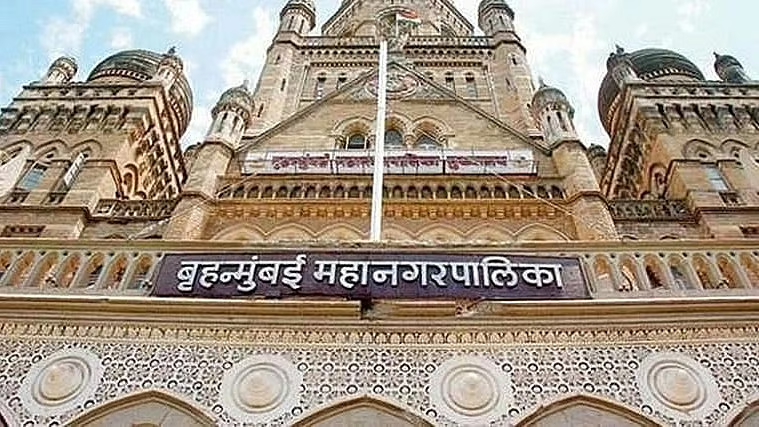

Mumbai’s 10% water cut is expected to remain in place until at least the end of September, despite the city’s seven major reservoirs reaching close to their combined storage capacity. The Brihanmumbai Municipal Corporation (BMC) has decided to continue the restriction as a precautionary measure before the onset of the drier months.
As of September 9, the city’s reservoirs held around 1.4 trillion litres of water, against a total capacity of nearly 1.45 trillion litres, translating into about 96% storage.
Additional Municipal Commissioner Vipin Sharma said the civic administration was maintaining a cautious approach as rainfall could weaken during the remaining weeks of September. Officials want to ensure adequate reserves are available through the dry season before restoring normal supply.
The seven reservoirs — Upper Vaitarna, Modak Sagar, Tansa, Middle Vaitarna, Bhatsa, Vihar and Tulsi — form the backbone of Mumbai’s municipal water supply.
However, current storage remains marginally below the levels recorded during the same period in the previous two years. Reservoirs stood at around 97.23% in 2025 and 97.75% in 2024, compared with approximately 96.41% on September 8 this year.
Supply Still Below Daily Demand
The water restriction was introduced on May 15, when reservoir storage was only about 23.5% of total capacity. Although the monsoon has substantially improved water availability, Mumbai currently receives around 3.85 billion litres of water daily, against an estimated demand of approximately 4.3 billion litres.
This leaves a shortfall of roughly 450 million litres a day.
Leakages, ageing pipelines, distribution challenges and rising consumption continue to affect supply in several neighbourhoods. Residents in parts of Malad have reported issues including low water pressure and discoloured water.
BMC Plans Longer-Term Measures
The civic administration is mapping its nearly 6,500-km water pipeline network to identify sections requiring replacement or repairs.
The BMC is also examining longer-term sources and infrastructure, including the Gargai water project, desalination facilities and greater use of treated wastewater, as part of efforts to strengthen Mumbai’s water security.
Meanwhile, the resumption of water supply to municipal swimming pools has drawn criticism, with some representatives calling for household and essential-use requirements to receive priority.
The BMC’s decision on ending the 10% cut will depend on rainfall patterns, projected consumption and reservoir levels through September. Even with lakes nearing full capacity, officials are seeking to maintain a sufficient buffer before increasing supply to normal levels.
For Mumbai, the situation highlights that reservoir storage alone does not determine water availability. The city’s ability to distribute water efficiently, control losses and manage demand remains equally important in ensuring reliable supply throughout the year.
Source: Construction World