
The Bombay High Court has dismissed two petitions filed by property owners who contested the acquisition of their land for the Bhendi Bazar cluster redevelopment project, ruling that the scheme serves a wider public purpose.
The Bombay High Court has upheld the legal framework governing land acquisition for the Bhendi Bazar cluster redevelopment project in Mumbai, rejecting challenges to the provisions under which the scheme is being implemented by the Saifee Burhani Upliftment Trust (SBUT).
The petitions sought to quash the 2019 land acquisition orders and a 2020 notice for taking possession of the properties. The petitioners, who were former residents of the demolished Lucky Building, questioned whether the acquisition was legally valid under the Maharashtra Regional and Town Planning Act (MRTP Act).
They argued that the land had not been specifically designated or reserved for a public purpose in the development plan. They also contended that the acquisition could not be carried out for a project implemented by a private trust such as SBUT.
HC backs public purpose of cluster redevelopment
A division bench of Justices MS Karnik and Shreeram Shirsat rejected the arguments, stating that the petitioners had misunderstood the concept of public purpose and the functioning of urban renewal schemes.
The state government argued that redeveloping congested residential and commercial areas under an Urban Renewal Scheme could qualify as a public purpose if the prescribed regulatory conditions were met. It maintained that SBUT’s involvement did not mean the planning authority had given up its responsibilities.
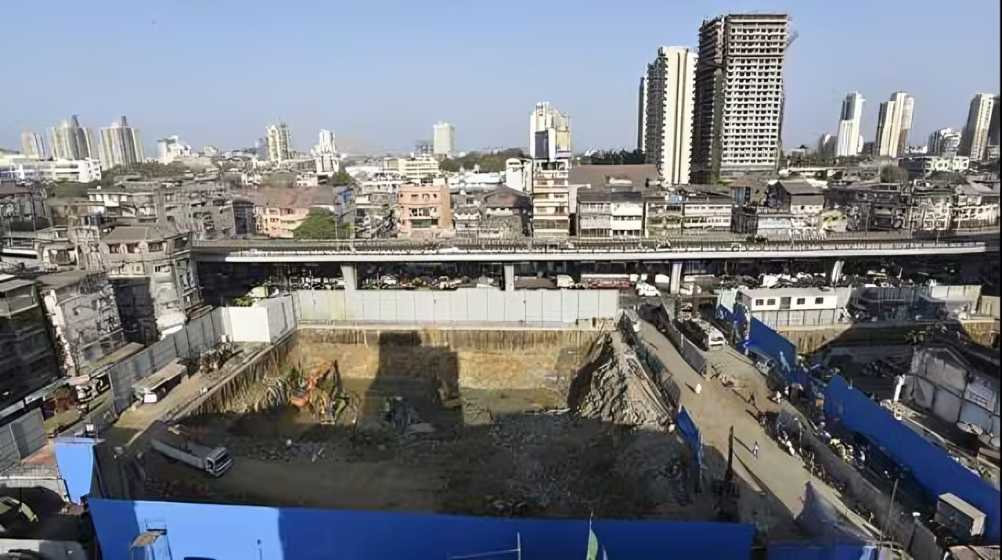
The court observed that a redevelopment scheme does not lose its public character simply because a private promoter or developer implements it. It noted that cluster redevelopment can improve living conditions through larger homes, wider roads, proper drainage and better common facilities.
The judges also observed that private interests must give way to the larger public interest, adding that the petitioners’ properties had not been taken away without compensation.
Petitioners question acquisition process
The petitioners also argued that their building had not been separately declared dilapidated or dangerous before its acquisition. The state government countered that the building was more than 100 years old and classified as a Category A cessed building, so a separate declaration was not required.
Representing SBUT, senior counsel Birendra Saraf told the court that the landowners opposing the cluster scheme accounted for around 7% of the landowners. He also argued that the petitioners had been aware of the redevelopment scheme since 2011 but approached the court in 2021, after the compensation award had been passed.
The court dismissed both petitions, upholding the legal basis for the land acquisition and the public purpose of the redevelopment scheme. However, the petitioners can pursue their pending claims seeking enhanced compensation through the applicable legal process.
Source: Hindustan Times