
Mumbai’s redevelopment model is increasingly reshaping how residents relate to the city—and not always for the better. What should ideally strengthen neighbourhood life is instead fragmenting it, turning citizens into stakeholders of individual housing gains rather than participants in a shared urban fabric.
At the heart of this shift is a system built on differentiated entitlements. Residents are divided across categories—cooperative housing societies, CESS tenants, MHADA occupants, gaothan communities, and slum dwellers classified as ‘eligible’ or ‘ineligible’. Each group negotiates its own benefits, often focused narrowly on securing larger homes or better compensation through redevelopment schemes.
Recent announcements reflect this trend. In Dharavi, residents living in chawls or buildings have been promised free homes ranging from 46.5 to 69.2 square metres. Eligible slum residents have been offered 32.5 sqm, though many are demanding more. In MHADA’s Motilal Nagar, residents have been offered 148.6 sqm but are pushing for 185 sqm. Across projects, disputes over rehabilitation area have become routine.
These demands are not without reason. As redevelopment projects scale up, so do developer profits. Increased rehabilitation areas often translate into higher saleable inventory for builders, especially when supported by rising FSI allowances. The result is a system where expanding private space becomes the primary metric of success.
What gets overlooked, however, is the role of shared spaces. Urban planning has long established that liveable cities depend not just on private housing, but on access to public infrastructure—roads, footpaths, parks, schools, and healthcare facilities. Yet, this aspect remains largely absent from redevelopment discourse.
The imbalance is stark. A 2007 study showed that Manhattan offers 24.4 sqm of public space per person, Shanghai 21.5 sqm, while Mumbai’s island city provides just 8.19 sqm. Despite this, policy conversations rarely include minimum guarantees for open or community spaces.
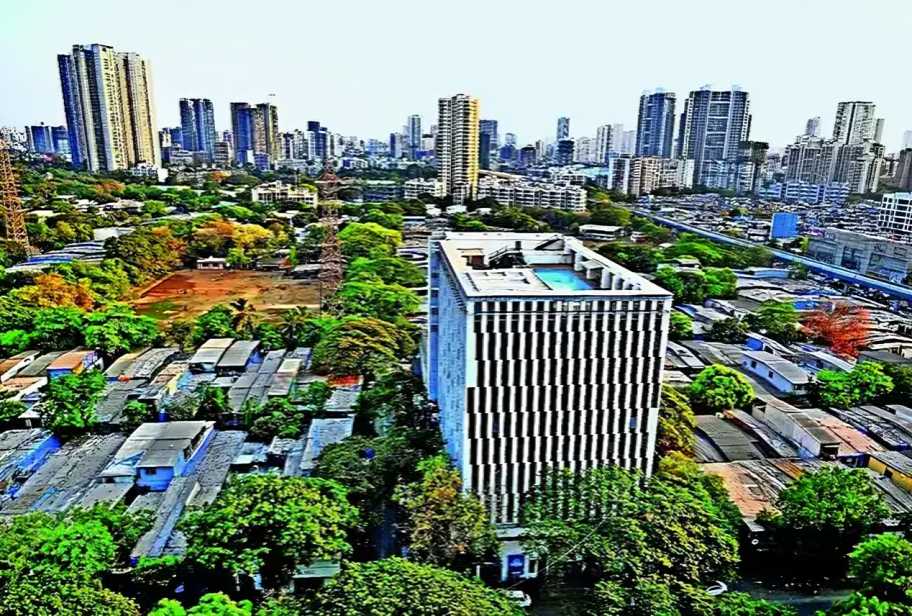
In practice, this leads to unsustainable densities. Projects like Motilal Nagar and Dharavi illustrate how increasing population concentration leaves little room for adequate shared infrastructure. As more housing is packed into limited land, the quality of public space declines.
Mumbai’s redevelopment story, therefore, raises a fundamental question: can a city remain liveable if it continues to prioritise private ownership over shared experience?
Source: Mumbai Mirror