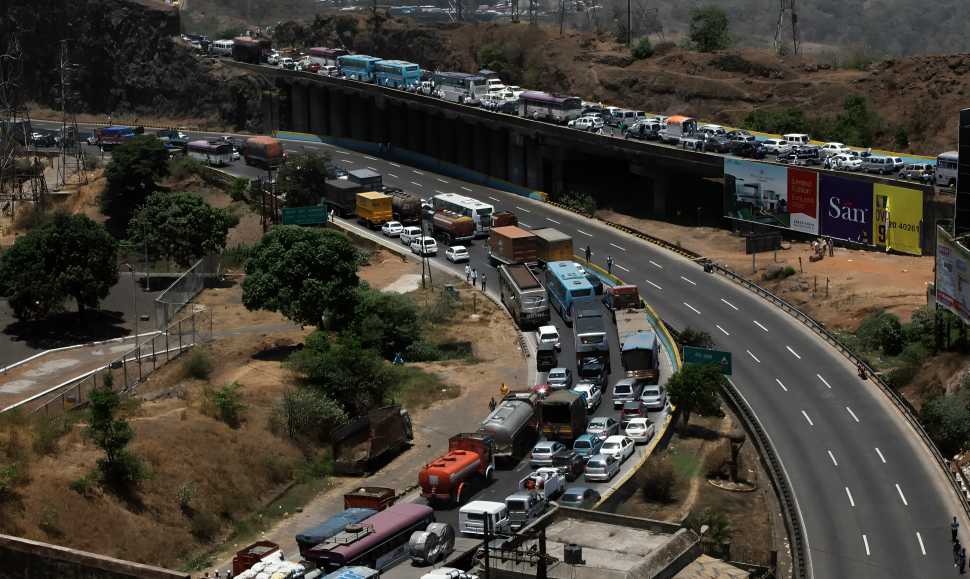

A newly opened connector on the Mumbai–Pune Expressway has significantly changed traffic movement patterns across one of Maharashtra’s busiest and most accident-prone highway stretches, with authorities reporting a major reduction in congestion along the Borghat section within days of the route becoming operational.
The recently commissioned Khopoli-to-Kusgaon connector, spanning nearly 20 kilometres, was developed to bypass the steep gradients and bottlenecks associated with the older Borghat alignment. According to transport officials, nearly 70 per cent of light motor vehicles have already shifted to the new route, while the older ghat stretch is now being used primarily by heavy commercial vehicles.
Officials said the redistribution of traffic has helped reduce congestion along the hill corridor, especially during peak travel periods between Mumbai and Pune. Highway monitoring teams have also reported no major accidents on either the old or new sections in the initial days after the diversion was introduced, indicating potential safety improvements through the separation of passenger and freight traffic.
Transport planners believe the development reflects a larger infrastructure strategy increasingly being implemented across India’s major economic corridors, where dedicated traffic systems are being designed to reduce congestion, improve logistics efficiency and enhance commuter mobility.
The Mumbai–Pune corridor handles substantial passenger and freight traffic every day, connecting Maharashtra’s key financial, industrial and technology hubs. The new connector was specifically designed to eliminate sharp slopes and difficult elevations that previously caused traffic slowdowns and vehicle strain, particularly during the monsoon season.
The route also bypasses congestion-prone areas near hill stations and tourism zones that regularly experience traffic spillovers during weekends and holidays.
Infrastructure experts say smoother traffic flow could also generate environmental and economic benefits by reducing fuel consumption, lowering vehicular emissions and improving travel time reliability for logistics operators.
However, transport analysts caution that the long-term success of the corridor will depend on regular maintenance, disciplined traffic management and integration with future multimodal transport systems such as rail freight and regional transit infrastructure.
The operational changes on the expressway are now being viewed as a possible model for future highway redesign projects in other high-density transport corridors across India.
Source: Urban Acres