
The Bombay High Court has permitted the felling of 847 mangrove trees for a transmission infrastructure project connected to the Mumbai-Ahmedabad bullet train corridor, while stressing that the decision is an “exceptional measure” and should not be considered a precedent for future cases.
The order was passed by a bench of Acting Chief Justice Ravindra V. Ghuge and Justice Gautam A. Ankhad on a petition filed by the Maharashtra State Electricity Transmission Company (MahaTransco). The utility sought approval to cut 847 mangrove trees for the construction of a 132 KV transmission line and substation required for the high-speed rail project. The proposal involves diversion of 3.35 hectares of forest land, including nearly two hectares of mangrove cover.
While granting approval, the court emphasised that compensatory afforestation should focus on restoring ecosystems rather than merely replacing the number of trees felled. The judges observed that planting trees hundreds of kilometres away cannot compensate for the environmental loss at the affected location.
“Compensatory afforestation is not intended to be a mere numerical replacement of trees felled for a project. Its purpose is ecological restoration. Plantation undertaken hundreds of kilometres away may satisfy a statistical requirement, but fails to restore the environmental benefits of the affected locality,” the bench observed.
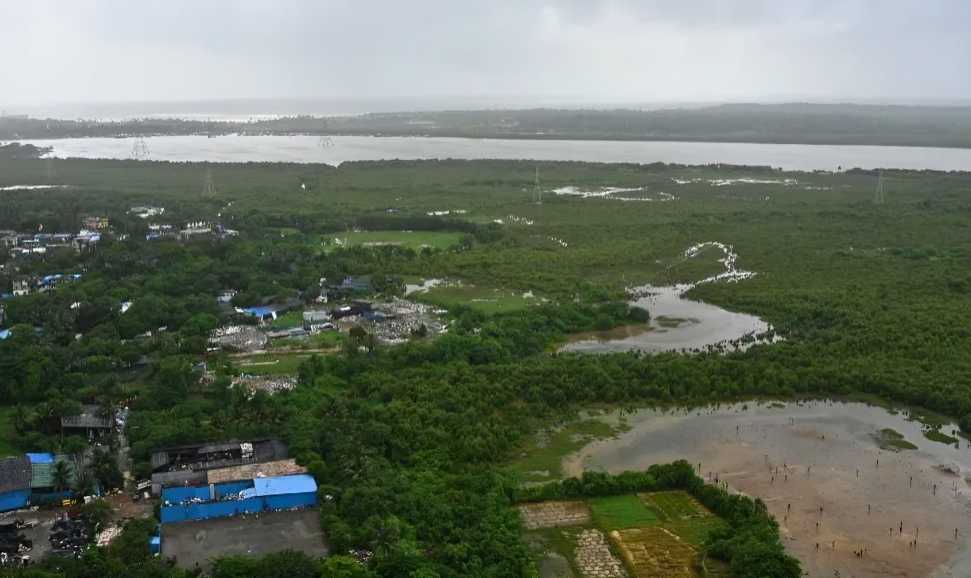
The case arose after the state proposed planting 7,457 non-mangrove trees across 6.71 hectares in Sangola, Solapur district, around 400 km from the affected mangrove area in Palghar. The Bombay Environmental Action Group opposed the proposal, arguing that it would not restore the local ecosystem.
Despite agreeing with the ecological concerns, the High Court allowed the project after MahaTransco assured it would also plant 26,664 mangrove saplings near Thane, closer to the affected site. The bench noted that it did not wish to interfere with the assessment of expert authorities and granted the approval based on the company’s commitments.
The court also criticised the Maharashtra government for failing to implement reforms ordered in September 2025 regarding compensatory afforestation. It noted that the state had not established afforestation land banks, published plantation data or created a monitoring mechanism.
Describing the delay as “continuing default” and “administrative apathy”, the bench directed the Chief Secretary to ensure compliance with its earlier directions within four weeks, warning that without such measures, compensatory afforestation would remain a “theoretical exercise”.
Source: The Indian Express