
The Mumbai Metropolitan Region Development Authority (MMRDA) has agreed with Singapore-based Surbana Jurong Infrastructure to prepare the Vision Document, Master Plan and planning framework for the ambitious Mumbai 3.0 project.
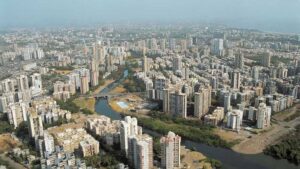
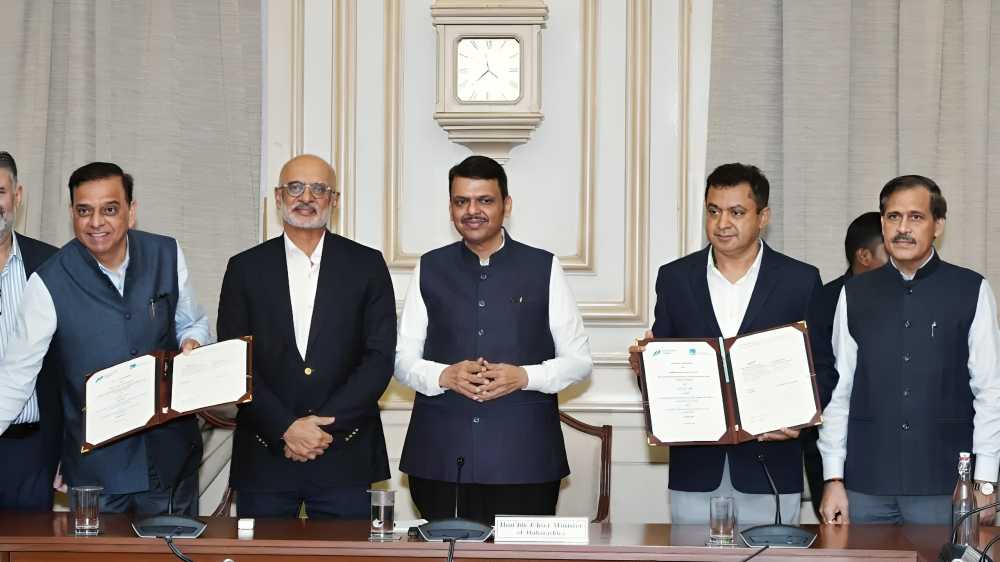
The agreement was signed by MMRDA Metropolitan Commissioner Dr Sanjay Mukherjee and Surbana Jurong Chief Executive (South Asia) Avinash Mishra in the presence of Maharashtra Chief Minister Devendra Fadnavis. The proposed development covers 323.44 sq km across 124 villages in Panvel, Uran and Pen talukas of Raigad district. According to MMRDA, the final concept plan is expected to be completed within 30 weeks.
The consultancy will begin with an assessment of existing land use, transportation systems, demographics, socio-economic conditions, utilities, environmental characteristics and public amenities. It will subsequently prepare a long-term spatial and economic development strategy for the region.
The Vision Document will establish Mumbai 3.0’s economic positioning, identify growth sectors and investment opportunities, and outline catalytic projects and place-making principles aimed at creating a sustainable and globally competitive urban centre.
The proposed planning framework will comprise three key elements: a Concept Structure Plan, Concept Mobility Plan and Concept Infrastructure Plan. The mobility component will focus on regional connectivity, mass transit, multimodal transport integration, pedestrian infrastructure and Transit-Oriented Development (TOD).
The infrastructure plan will cover essential services such as water supply, sewerage, stormwater drainage, solid waste management, electricity, gas and social infrastructure. Consultations with government departments, agencies and other stakeholders will form part of the planning process.
The consultancy’s first phase is scheduled to conclude within 30 weeks, excluding MMRDA’s review and approval period. The timeline includes four weeks for the inception report, 10 weeks for the existing situation report, 16 weeks for the Vision Document, 24 weeks for the draft concept land-use plan, 26 weeks for stakeholder consultations and 30 weeks for the final concept plan.
The agreement follows an MoU signed by MMRDA and Surbana Jurong at the World Economic Forum in Davos in January 2026. The Maharashtra government subsequently approved the consultancy’s appointment on a Government-to-Government basis in June.
Mumbai 3.0 is envisioned as a new economic and urban growth centre for the MMR, strategically positioned near the Mumbai Trans Harbour Link, Navi Mumbai International Airport and Jawaharlal Nehru Port. The project is expected to accommodate residential, commercial, industrial, institutional and logistics activities.
Speaking at the event, the Chief Minister said, “The Mumbai Metropolitan Region has the potential to become a USD 1.5 trillion economy, as recognised by NITI Aayog, adding that Mumbai 3.0 is a key step towards achieving that vision.”
Deputy Chief Minister and MMRDA Chairman Eknath Shinde said, “The project would combine global urban planning expertise with Maharashtra’s development ambitions to create a sustainable, well-connected and future-ready city.”
MMRDA Metropolitan Commissioner Dr Sanjay Mukherjee said the initiative would establish the foundation for a globally benchmarked urban centre by combining international planning expertise with an innovative land policy that seeks to make landowners partners in the development process.
Source: Mid-day