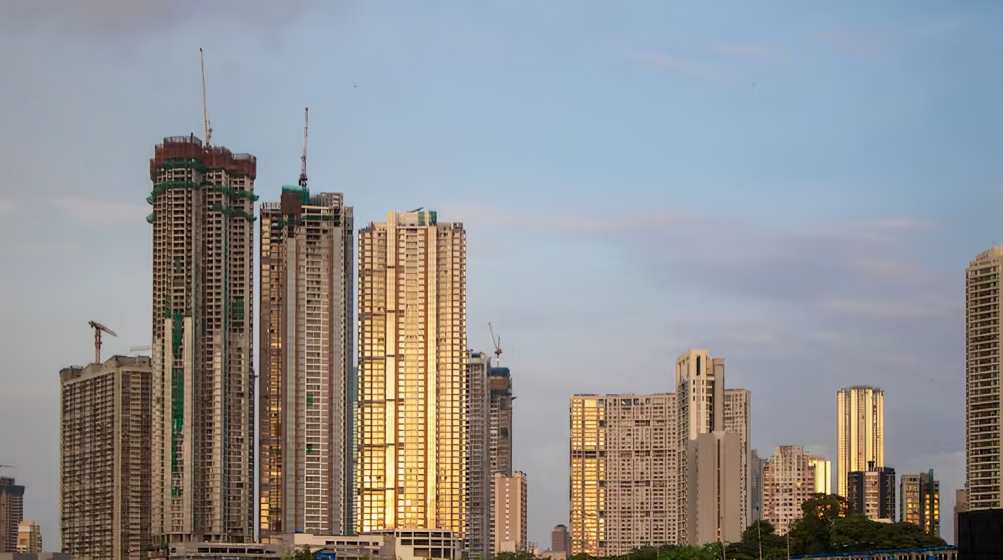

Mumbai’s commercial real estate landscape is undergoing a shift as companies increasingly look beyond traditional business districts and explore established residential neighbourhoods for office space.
Locations such as Chembur, Bhandup, Mulund, Goregaon, Malad and Andheri already offer large residential catchments, access to talent, public transport, healthcare, retail and social infrastructure. This established ecosystem is making suburban markets increasingly attractive to businesses seeking workplaces that are convenient for employees.
Shilpin Tater, Managing Director, Superb Realty, says,
“Occupiers today are looking beyond the traditional parameters of location, cost and connectivity to assess the overall quality of the workplace experience. Proximity to established residential catchments can support employee convenience and accessibility, while factors such as air quality, green spaces, sustainability and the quality of the surrounding environment are also gaining importance. This is making mature suburban markets increasingly relevant, as they can offer businesses a more integrated workplace ecosystem that supports both operational efficiency and employee wellbeing.”
The trend is reflected in Mumbai’s office leasing activity. The city recorded 10.7 million sq ft of leasing during the first half of 2026, marking a 30% year-on-year increase, according to Cushman & Wakefield.
Knight Frank data shows SBD Central, covering Kurla, Ghatkopar, Vikhroli, Kanjurmarg, Powai, Bhandup and Chembur, accounted for 46% of Mumbai’s office leasing in H1 2026. SBD West, comprising Andheri, Jogeshwari, Goregaon and Malad, contributed another 20%.
Karan Villaitramani, Director, Srishti Group, says,
“Bhandup and Mulund have the advantage of maturity. Their residential base has evolved over several decades, creating a self-sustaining ecosystem of schools, healthcare, retail, recreation and everyday services. For commercial developers, this reduces the friction associated with establishing a workplace destination because the surrounding urban infrastructure is already functional. The opportunity now lies in integrating commercial spaces more closely with this existing ecosystem.”
Grade-A office rents in Mumbai’s Eastern suburbs stood at Rs 116–161 per sq ft per month, according to an Embassy Office Parks REIT filing, with values rising over the years amid sustained corporate demand.
The Western suburbs are following a similar trajectory. Goregaon has developed into a more diversified commercial hub, supported by its proximity to Andheri and Malad and improving connectivity.
Dhruman Shah, Promoter, Ariha Group, says,
“Goregaon’s evolution is a good example of how residential and commercial real estate can increasingly complement each other. Its strategic position allows businesses to tap into established residential catchments while remaining connected to major employment corridors. As infrastructure improves and commercial stock becomes more sophisticated, the area has the potential to strengthen its position as a standalone business destination rather than functioning only as an extension of neighbouring commercial hubs.”
The shift indicates that Mumbai’s future office growth may become more distributed, with established residential neighbourhoods increasingly supporting employment alongside housing and commerce. For occupiers, these locations offer convenience and flexibility, while developers gain opportunities to introduce commercial projects within mature urban ecosystems.
Source: Business News Week