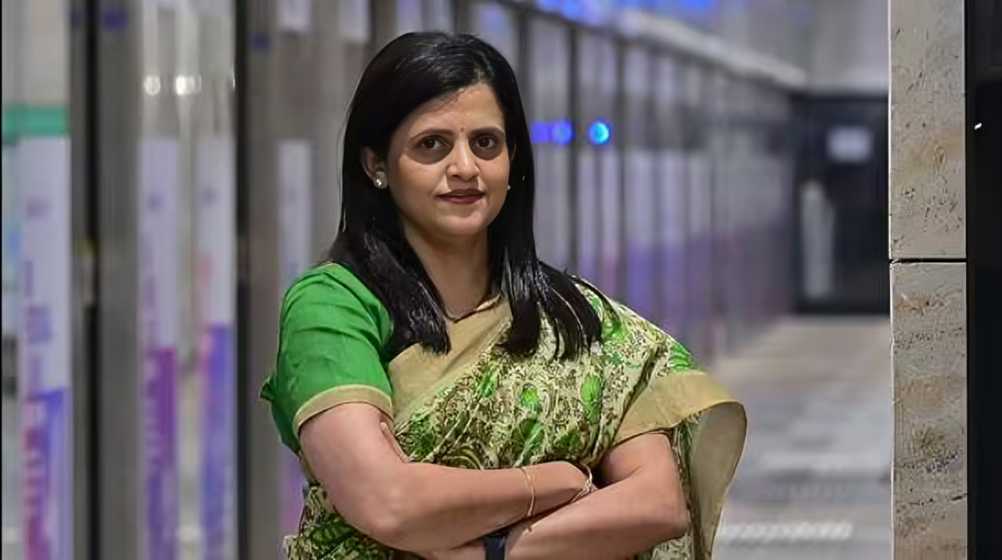

Mumbai Municipal Commissioner Ashwini Bhide has brought the idea of congestion pricing back into focus, suggesting that the city could consider charging vehicles entering heavily congested areas once its public transport network is strengthened.
Speaking on a private podcast, Bhide said a viable public transport alternative would be essential before introducing any system designed to discourage private vehicle use. She pointed to Singapore, where congestion pricing operates alongside an extensive network of Metro, monorail, buses and waterways supported by common ticketing.
“Once you give citizens the option of public transport, which is a good one, then you can force them to not use private vehicles, and can also use a mechanism to incentivise or disincentivise that. In cities like Singapore, which has congestion pricing, are able to do that because of its robust public transport, including metro, monorail, bus and waterways, with a common ticketing system. Despite this, if someone wants to use a private vehicle, then they have to pay higher,” Bhide explained.
She added, “For Mumbai also we can think of introducing congestion pricing in certain areas, once we enhance our public transport system, including robust bus transport.”
Infrastructure Expansion Could Enable Policy
Bhide, who also serves as Managing Director of the Mumbai Metro Rail Corporation, said Mumbai is expected to see substantial improvements in its transport infrastructure over the next five years.
According to her, Metro projects are expected to become operational, the entire Coastal Road is slated for completion and several ongoing infrastructure works are likely to be finished during this period.
The possibility of congestion charges has been discussed in Mumbai for several years by politicians, transport specialists and commuters as a potential tool to manage traffic, particularly during peak hours.
Earlier Proposal Focused on South Mumbai
The proposal has previously received political backing. BJP corporator Makarand Narwekar had suggested conducting a pilot congestion-pricing programme for single-occupant private vehicles entering some of South Mumbai’s busiest districts during peak periods.
His proposed areas included Fort, Nariman Point and Colaba.
The renewed discussion comes as Mumbai continues to experience pressure from rising vehicle numbers and recurring congestion. Congestion pricing typically involves imposing a fee on vehicles entering or travelling through designated high-traffic zones, with the dual objective of reducing private vehicle dependence and encouraging public transport.
Bhide’s comments, however, suggest that Mumbai would first need to offer commuters a sufficiently reliable alternative before such charges could realistically be introduced.
The city’s expanding Metro network, Coastal Road and improvements to bus transport could therefore become important prerequisites for any future congestion-pricing policy. Rather than imposing charges immediately, the approach outlined by Bhide places the emphasis on building transport alternatives first and using pricing later to influence travel behaviour.
Source: The Free Press Journal