
Mumbai’s proposed underground road network, named Pataal Lok, has received in-principle approval from Chief Minister Devendra Fadnavis, paving the way for a major infrastructure project aimed at reducing traffic congestion across the city. Estimated at Rs 53,928.2 crore, the initiative envisages a 31-km tunnel network in each direction, connecting several important road corridors.
The project will be developed in two phases, with the first covering the western and central parts of Mumbai and the second extending towards Ghatkopar in the eastern suburbs.
The central section will pass beneath the Mithi River, linking Bandra-Kurla Complex (BKC) and Dharavi. From there, four underground routes are planned. These will connect the Bandra-Worli Sea Link and Coastal Road, Dharavi, BKC’s G Block and Mumbai’s international airport.
Another section will provide an exit at Chunabhatti, connecting motorists to the Eastern Express Highway (EEH). The northern route will run parallel to the Western Express Highway (WEH), passing beneath Bandra East, Vakola and Vile Parle before extending towards the airport’s Terminal 2.
The second phase will take the network further east through congested localities such as Asalpha and Sakinaka, eventually emerging near the EEH in Ghatkopar.
According to the Chief Minister’s Office, “The project is planned to connect the Bandra-Worli Sea Link, the bullet train station at BKC, Dharavi, Bandra-Kurla Complex, Mumbai Airport, the Western Express Highway and the Eastern Express Highway through entry and exit routes.”
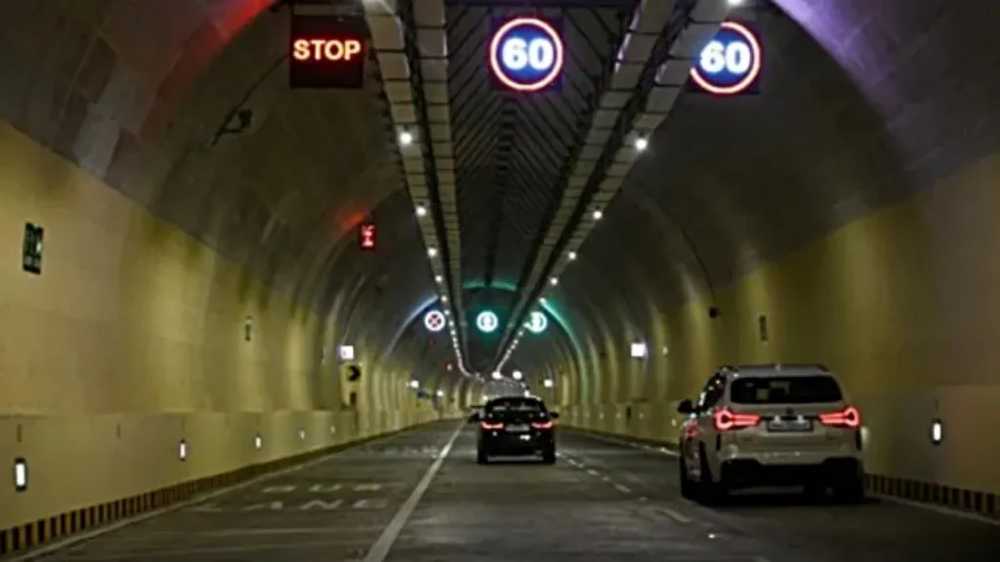
The tunnels are expected to offer an alternative to surface roads, where average vehicle speeds reportedly range between 15 and 20 kmph. The proposed underground corridors are designed for speeds of up to 80 kmph.
The Mumbai Metropolitan Region Development Authority (MMRDA) will now undertake further planning, including appointing consultants, arranging finances, securing environmental and regulatory approvals and selecting contractors.
The project will require approximately 20 no-objection certificates, along with Coastal Regulation Zone and other environmental clearances. Most tunnelling is expected to use tunnel boring machines, while cut-and-cover and U-trough techniques will be adopted for ramps and other sections.
A construction schedule is yet to be announced, while the MMRDA is also exploring financing options, including loans from international lenders.
Source: The Indian Express