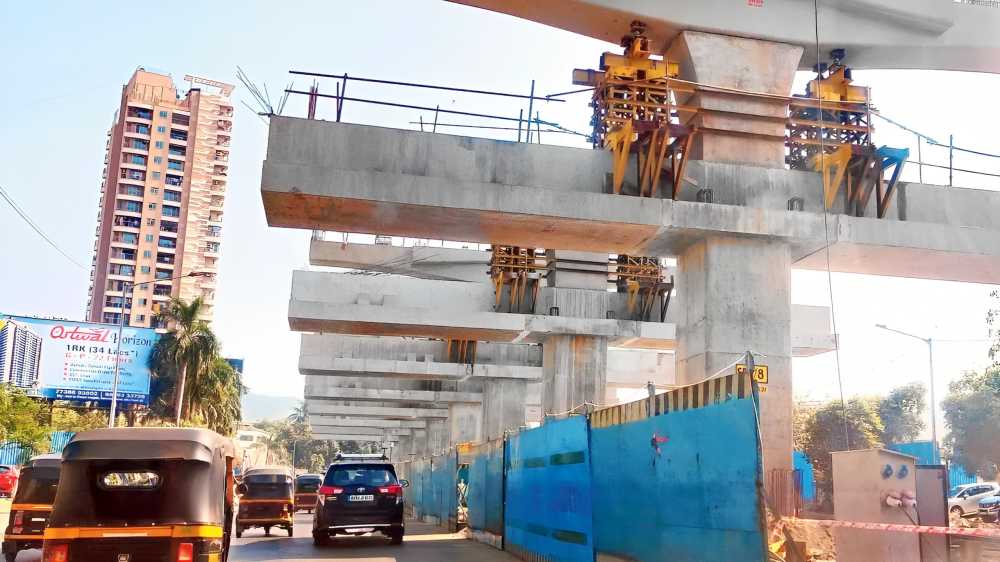

August 8, 2025: Thane’s Metro Line 4 and the Ghodbunder Highway widening project—both major infrastructure undertakings—are facing growing criticism from urban planners and civic activists who warn that recent design changes may escalate costs and delay delivery timelines. These concerns, voiced during public consultations, centre around overlapping designs and poor inter-agency coordination that could undermine the long-term objectives of both high-budget projects.
Officials have confirmed that plans are underway to develop dedicated transport hubs beneath eight elevated stations on the Kapurbawdi–Gaimukh Metro 4 corridor. Additionally, the two extreme left lanes of the widened highway are to be earmarked exclusively for public transport. While these changes aim to boost last-mile connectivity and encourage sustainable commuting, experts argue that they risk undoing much of the Rs 600-cr highway development—especially as the project has already necessitated extensive tree felling and merging of service roads.
A key concern is the revised placement of stairways for the elevated metro stations. With central medians removed and lanes realigned, the stairways are now expected to descend into the middle of the highway. Urban mobility experts highlight this as a significant design flaw, reflecting a lack of coordination between the agencies managing the metro and road projects.
Environmental groups, meanwhile, have criticised what they see as unnecessary destruction and potential wastage of resources. They question the logic behind mass tree removal if service lanes are to be reinstated, calling it an environmentally and economically reckless move.
The transport ministry has defended the alterations, stating that long-term commuter benefits and improved multimodal integration justify the changes. However, urban planners remain sceptical, warning that structural rework and possible land acquisition could inflate budgets and extend project timelines.
Activists have also raised transparency issues, calling for wider public involvement before any major design modifications are finalised. With Metro 4 poised to play a pivotal role in the Mumbai Metropolitan Region’s transit future, and the Ghodbunder Highway serving as a vital arterial link, the stakes are high. As both projects advance, the situation highlights a recurring urban dilemma—how to pursue ambitious development without compromising on execution, ecology, or public accountability.
Source: Urban Acres