
As redevelopment, migration and rising living costs reshape Mumbai, the city’s neglected rental ecosystem is emerging as one of its biggest economic and social challenges.
Mumbai’s housing policy continues to prioritise ownership even though renting has become the dominant reality for a large section of the city’s workforce. According to Census-linked housing estimates and urban policy studies, nearly 40-45% of Mumbai’s residents live in rented, shared or informal housing arrangements. Yet formal rental supply remains severely constrained.
The mismatch is becoming sharper as property prices rise.
Knight Frank India and RBI-linked affordability studies continue to rank Mumbai as India’s least affordable housing market. In several mid-market and premium locations, residential prices now range between Rs 25,000 and Rs 60,000 per sq ft, pushing ownership beyond the reach of most middle-income households. Renting is no longer transitional housing; for millions, it is the only viable option.
However, Mumbai’s rental ecosystem remains deeply unstructured. Urban researchers including Shirish Patel and Vaidehi Tandel have repeatedly highlighted how decades of restrictive rent-control laws discouraged formal rental development and reduced incentives for landlords to lease properties legally.
The consequences are visible across the city. Thousands of buildings are simultaneously entering redevelopment under society, MHADA and cluster schemes, displacing residents into an already stressed rental market. Property consultants including Anarock, JLL and Knight Frank have reported rental appreciation of 15-30% across several Mumbai micro-markets over the past two years.
In redevelopment-heavy locations such as Bandra, Andheri, Powai, Goregaon and Lower Parel, monthly rents for standard 2BHK apartments now commonly range between Rs 60,000 and Rs 1 lakh depending on connectivity and supply. In parts of South Mumbai, rents often exceed Rs 1.5 lakh per month. Even peripheral markets such as Thane and Navi Mumbai have seen annual rental growth of 8-15% because of spillover demand.
This is creating a wider economic burden. Housing and urban mobility studies estimate that many lower and middle-income households in Mumbai spend between 35% and 50% of their monthly income on rent and commuting combined. Globally, housing expenditure above 30% is considered financially stressful.
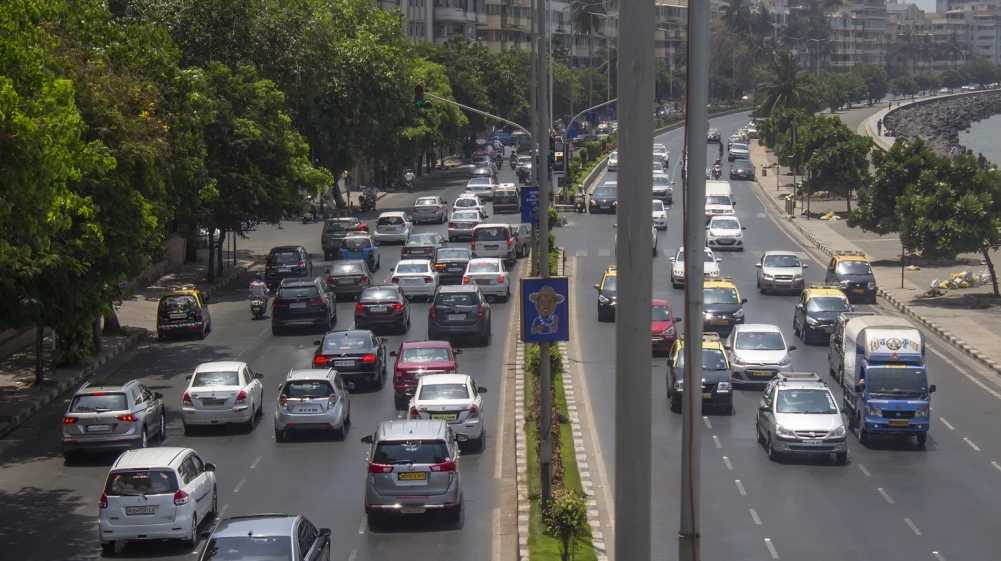
The transport implications are equally severe. Mumbai’s suburban railway system carries over 70 lakh passengers daily, among the highest commuter densities in the world. Millions spend between two and four hours travelling every day because affordable housing near business districts remains inaccessible.
Ironically, this crisis coexists with large volumes of vacant housing stock. Census 2011 recorded more than 4.8 lakh vacant homes within Greater Mumbai, while wider MMR estimates later suggested the figure may have crossed 10 lakh units. Independent studies have repeatedly linked this to speculative investment patterns and weak rental activation policies.
Policy intervention remains limited. Although the Model Tenancy Act was introduced in 2021 to modernise tenancy regulation, implementation across states has been slow. Maharashtra still lacks a large-scale institutional rental framework despite having one of India’s largest urban rental populations.
Meanwhile, central housing policy remains overwhelmingly ownership-driven. Under PMAY-Urban, over 1.18 crore houses have been sanctioned nationally, while rental housing initiatives such as the Affordable Rental Housing Complex scheme have seen limited adoption in Mumbai.
This approach is increasingly unsustainable for a metropolitan region expected to cross 3 crore residents in the coming decades. Mumbai needs institutional rental housing near transit corridors, tax incentives for long-term leasing, faster tenancy dispute resolution and redevelopment-linked rental transition planning.
Without a credible rental housing strategy, Mumbai risks becoming economically powerful but socially exclusionary, a city where the workforce sustaining its economy can no longer afford to live within reach of opportunity.