
Mumbai’s development is increasingly moving beyond its traditional boundaries, with the harbour emerging as a crucial link between the island city, Navi Mumbai and the mainland. Major infrastructure projects are creating opportunities for a more connected Mumbai Metropolitan Region (MMR), potentially changing where people live, work and invest.
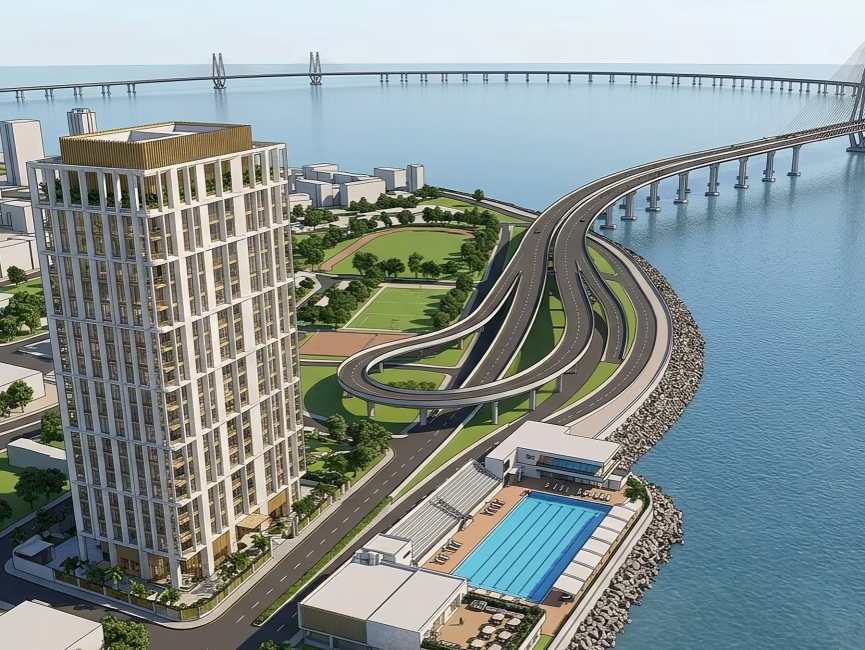
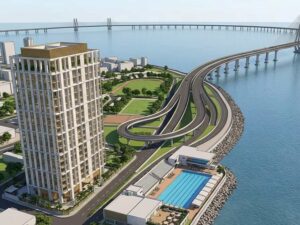
The opening of the 21.8-km Mumbai Trans Harbour Link (MTHL), also known as Atal Setu, in January 2024 established a direct connection between Sewri and Navi Mumbai. A Japan International Cooperation Agency (JICA) study subsequently found that property prices near the bridge’s entry points recorded stronger growth after its opening, with some connectivity benefits reflected in prices during construction.
The transformation gained momentum when Navi Mumbai International Airport (NMIA) began commercial operations on December 25, 2025. Its first terminal is designed to handle 20 million passengers annually, with the airport eventually planned to accommodate 90 million.
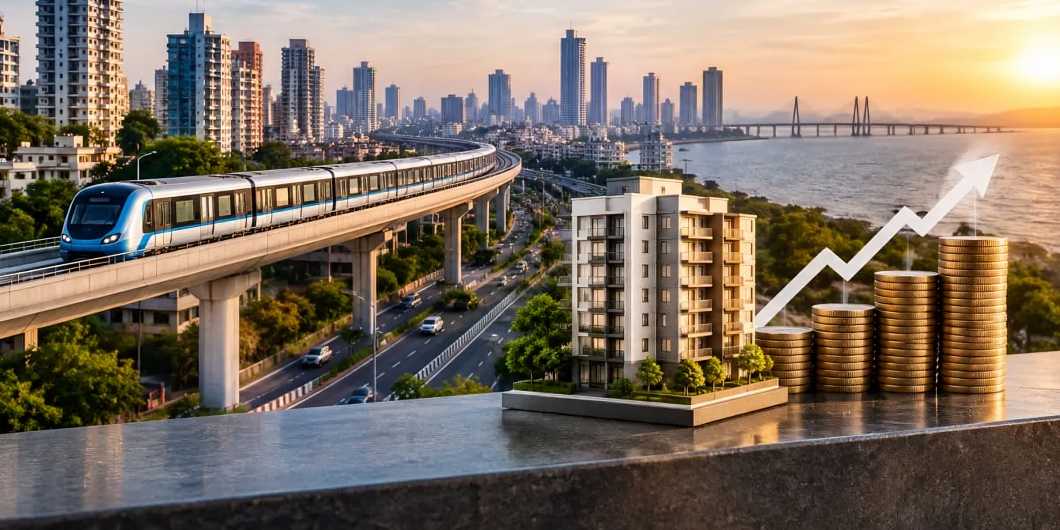
Further integration is expected through a proposed 35-km Metro corridor connecting Chhatrapati Shivaji Maharaj International Airport and NMIA. Wider Metro expansion is also linking emerging residential and employment hubs across Thane, Bhiwandi, Kalyan and Ulhasnagar. Meanwhile, Navi Mumbai’s average apartment prices rose by more than 22% between 2021 and 2025, with Ulwe and Kharghar witnessing sustained appreciation.
Real estate developer Pujit Aggarwal believes infrastructure’s impact extends beyond property values.
“The easiest way to read a new bridge or airport is through what happens to property prices around it. The more consequential question is what happens to the city around that infrastructure,” said Aggarwal. “When people can move more easily, businesses begin to reassess location, employers gain access to a wider talent pool and housing can follow jobs into places that were earlier considered peripheral. That is when connectivity starts altering the metropolitan map.”
The next phase includes Mumbai 3.0, officially planned as the Karnala-Sai-Chirner (KSC) New Town. Covering approximately 323 sq km across 124 villages in Uran, Panvel and Pen, the proposed development could accommodate businesses, offices, housing, healthcare, education and logistics facilities.
Plans for a third MMR airport near Vadhavan in Palghar district could further expand the region’s economic reach.
Aggarwal said, “Mumbai’s next chapter can be more distributed,” highlighting the potential for multiple connected economic centres to drive long-term regional growth.
The success of this transformation will depend on whether infrastructure translates into sustained employment, business activity and housing demand across the metropolitan region.
Source: Mid-day